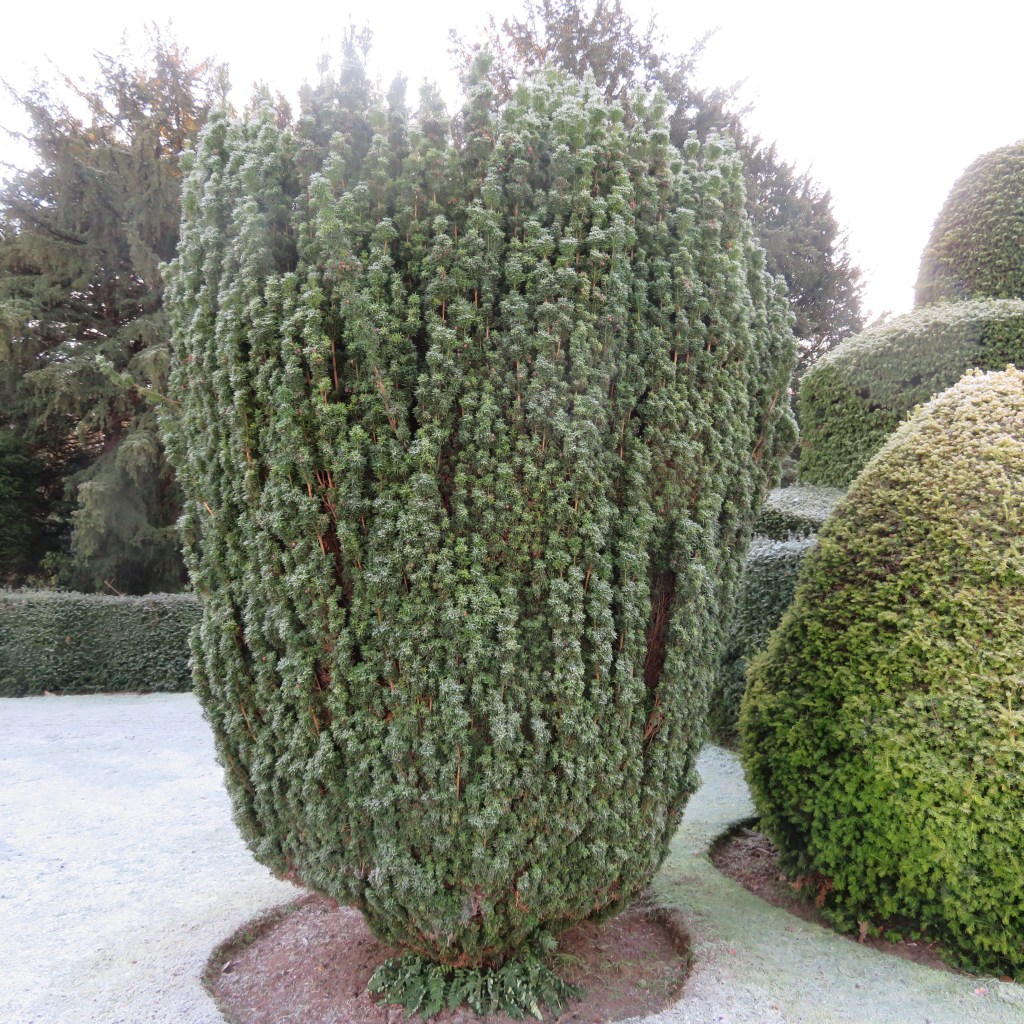
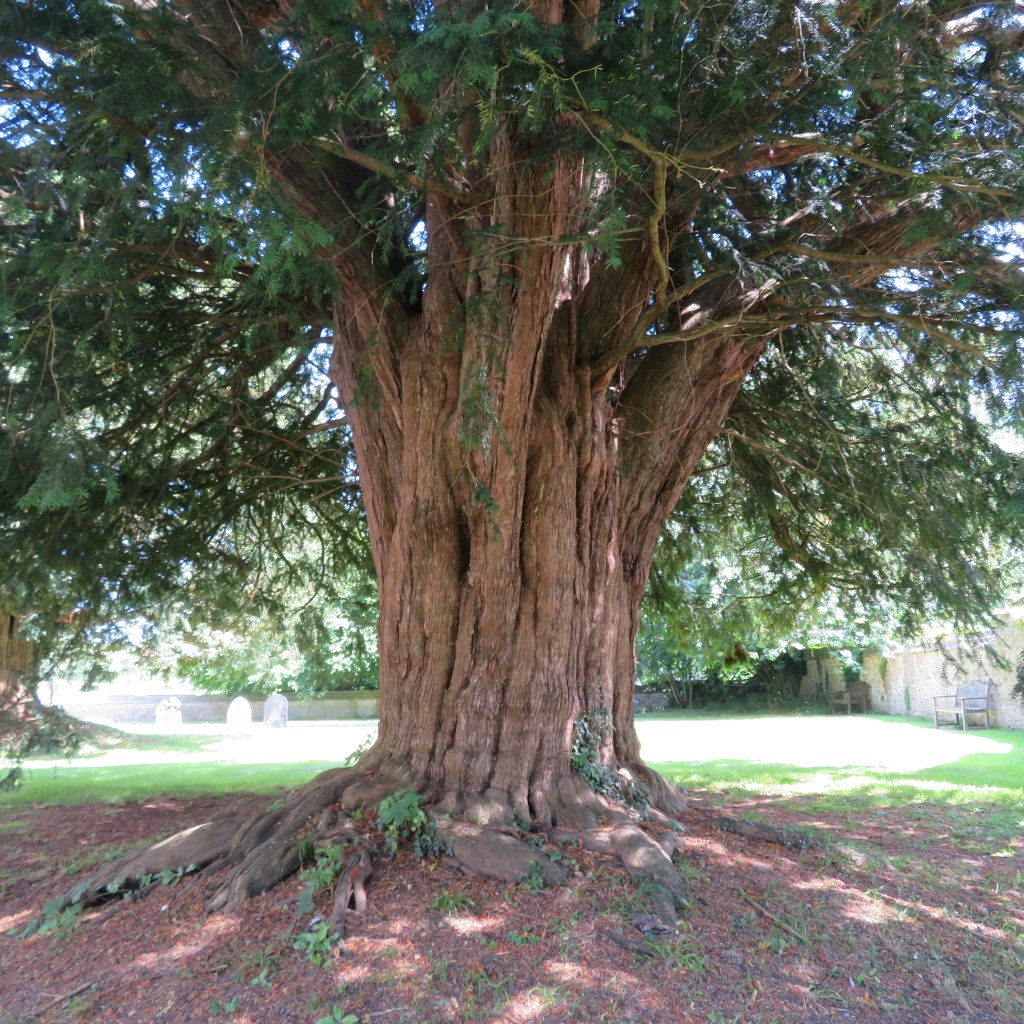
The yew tree, the source of the potent anti-cancer drug paclitaxel (sold under the brand name Taxol) and an iconic plant in grand British gardens, parks, and churchyards, is immortalised by William Wordsworth.
.
There is a Yew-tree, pride of Lorton Vale,
Which to this day stands single, in the midst
Of its own darkness, as it stood of yore,
…
Of vast circumference and gloom profound
This solitary Tree! – a living thing
Produced too slowly ever to decay
Of form and aspect too magnificent
To be destroyed.
William Wordsworth, Yew Trees (1815)
Not long after the poem was written, the tree which had a trunk with a 27-foot circumference was halved by a storm. However, it still stands with little sign of storm damage.
Paclitaxel was discovered as part of the US National Cancer Institute program in which extracts of thousands of plants were screened for anticancer activity. In 1963, a
crude extract from the bark of the Pacific yew (Taxus brevifolia), a scarce and slow-growing evergreen found in the old-growth forests of the US Pacific Northwest, was
found to be active against many tumors. Further investigations led to isolation of the active compound which is also found in the easy growing English or European yew (Taxus baccata).
Subsequent development led to paclitaxel, a drug that was first licensed for medical use in 1993. Formulations of paclitaxel are still widely used in the first-line management of many types of cancers. The drug is on the WHO approved List of Essential Drugs.
As the amounts of the drug found in the plant is small, much of it is now produced semi-synthetically from a more abundant precursor molecule isolated from Taxus baccata. Cell cultures are also being used to produce the drug.
#MedicinalPlants #NaturesMedicines #Herbal #Natural #Taxol #CancerDrugs #YewTree #Paclitaxel # Botanical @MedicineTrees2023
The molecule is so complicated that more direct cost-effective synthesis has yet to be achieved.

 Medicine Trees
Leave a comment