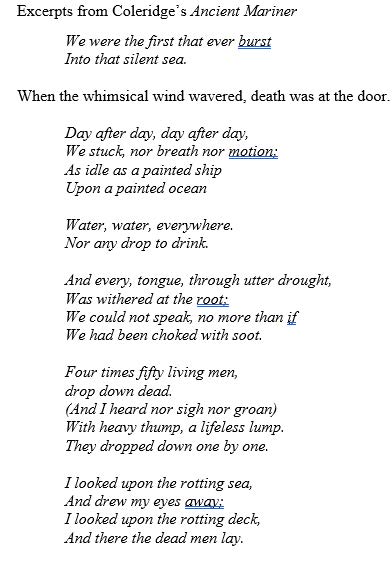
As Coleridge described better than most in his Ancient Mariner (see excerpt at the end) the first transoceanic voyage in the age of the sail was a dicy dance with death.
In the first half of the eighteenth century, the British Admiralty deciding to end Spanish monopoly in the Pacific sent an expedition consisting of eight ships manned by 1955 men under Commodore George Anson.
On 15 June 1744, four years after they set off, Anson sailed back into Spithead on the southern coast of England. Celebration was called for but he was in no mood for it. Over half of his crew had succumbed.
‘We had the strongest apprehensions either of dying by the scurvy, or of being destroyed with the ship, which for want of hands to work her pumps, might in a short time be expected to flounder,’ recorded the chaplain on the Centurion, one of Anson’s ships.
Scurvy was a disease no one understood except for its devastating effects. It grew into a major disease when European navigators first sailed across the vast oceans, across the Atlantic and around the African Cape of Good Hope. During Vasco da Gama’s first voyage (1497-1499), scurvy took hold by the time the São Rafael reached Malindi on the East African coast.[i] Of the 249 men enlisted on the first fleet of the Dutch East Indies Company that left Texel for the Spice islands in 1595 only 88 returned safely two years later, most dying of scurvy.
‘The signs to know this disease in the beginning are divers: by the swelling of the gummes, by denting of the flesh of the leggs with a mans finger, the pit remayning without filling up in a good space. Others show it with their lasinesse; others complaine of the cricke of the backe, etc., all which are, for the most part, certaine tokens of infection. I wish that some learned man would write of it, for it is the plague of the sea, and the spoyle of mariners’, wrote Sir Richard Hawkins in 1593 during hiv voyage to Brazil.
‘Doubtlesse’, he continues, ‘it would be a meritorious worke with God and man, and most beneficiall for our countrie. … ’[ii]
Experienced seamen like Hawkins were aware of several possible treatments. The Dutch learnt quickly. By carrying lemon juice, horse raddish and scurvy-grass with them on their second voyage to the East Indies, only 15 men were lost.
Hawkins observed that ‘in twentie yeares, since that I have used the sea I dare take upon me to give accompt of ten thousand men consumed vith this disease. … That which I have scene most fruitfull for this sicknesse, is sower oranges and lemmons’. However, he was still uncertain about the best remedy for he also found useful ‘a water … called Dr. Stevens his water.’ Others were unconvinced too, for it was not until his third trans-oceanic voyage, 1601-3, this time to the East Indies rather than to Brazil that James Lancaster carried lemon juice on board his flagshig The Dragon. Sadly, his other three ships had no lemon juice and Lancaster had to come to their aid.
‘They were hardly able to let fall an Anchor, to save themselves withall’, recounted the chronicler, Samuel Purchas.[iii]
‘The Generals went aboord of them, and carryed good store of men, and hoysed out their Boats for them, which they were not able to doe of themselves. And the reason why the General’s men stood better in health then the men of other ships, was this: he brought to Sea with him certaine Bottles of the Juice of Limons, which hee gave to each one, as long as it would last, three spoonfuls every morning fasting. … By this meanes the General cured many of his men and preserved the rest’.
The therapeutic effect of oranges and lemons was promoted by others too, including Kramer.
‘Do not seek the cure of scurvy in the armamentarium of the physician or in the apothecary shop. Pharmaceuticals will be of as little use as the art of the surgeon. Use fresh vegetables, the juice of fresh antiscorbutic plants, oranges and lemons or the juice of those fruits preserved with sugar; you will be able to overcome this terrible disease easily without anything more.’[iv]
The devastating disease soon entered the English lexicon as a disparaging descriptor. Samuel Pepys, the seventeenth century diarist, wrote of ‘scurvy words’, ‘scurvy stories’, ‘scurvy illnesses’ and ‘scurvy letters’, using the word scurvy as an adjective that denoted unpleasantness.[v]
Many potential treatments were tried empirically with little success or inconsistemt results as the cause was unknown. James Lind (1716-94), a Scottish doctor, newly promoted surgeon to HMS Salisbury knew only too well how unforgiving scurvy could be when it struck in the high seas. As he explained, some believed it to be connate (congenital), others that it was hereditary, and still others that it was infectious – ‘the direful seeds of it transmitted from scorbutic parents, and sometimes from a scorbutic nurse.’[vi]
HMS Salisbury was patrolling the English Channel when an epidemic of scurvy broke out on board. On 29th May 1747 he decided to turn the disaster into an opportunity by running a comparative trial of six widely used but unproven remedies.
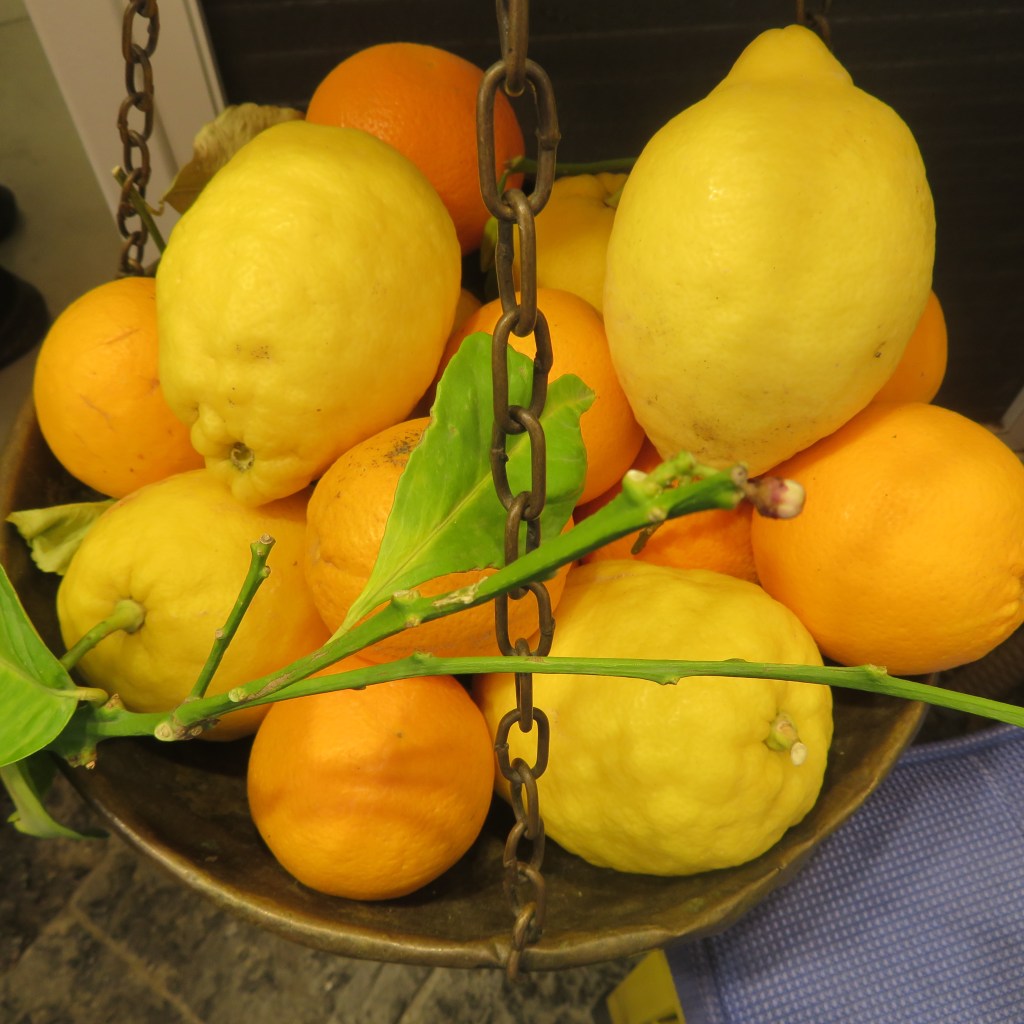
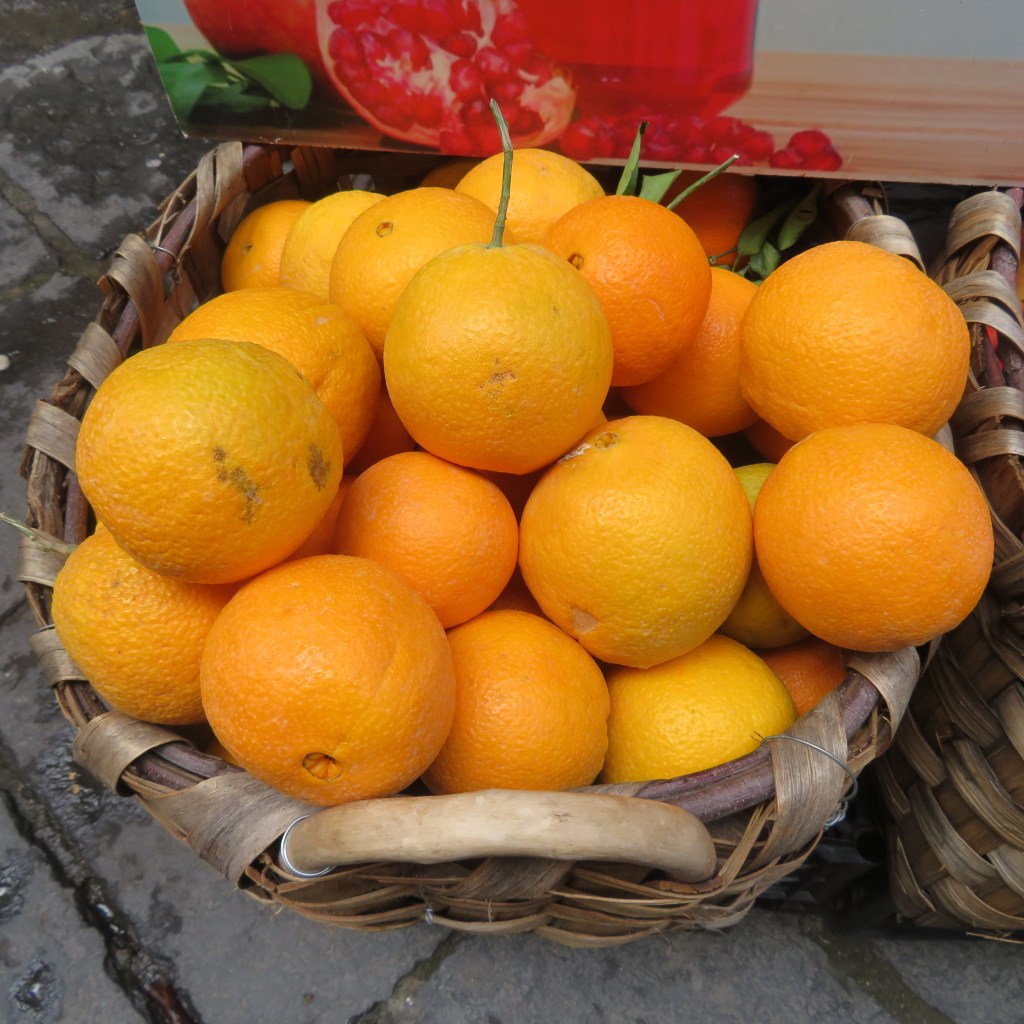
Lind recruited twelve scurvy patients – ‘cases as similar as he could have them’ and putting them on the same diet. Two patients were given ‘a quart of cyder a day’. Each of the other five treatments were given to two other patients – Elixir vitriol, Vinegar, Sea water, Oranges and lemon, and a concoction that included nutmeg, garlic, tamarind, myrrh, and balsam of Peru. Lind’s conclusion was that ‘oranges and lemons were the most effectual remedies for this distemper at sea.’
However, the admiralty, including Anson who had by then become Lord of the Admiralty and to whom he dedicated his treatise on scurvy, was unconvinced. The Sick and Hurt Board preferred a Malt Infusion which a Dr David MacBride supposedly ‘validated’ on patients in case reports but with the treatment confounded by apples, lemons, wild celery, and sorrel, all rich sources of vitamin C, given to the patients as well. It was not until 1795 that lemon juice was routinely used prophylactically by the Royal Navy. Yet, well before Lind’s trial, it was widely known that various citrus fruits and plants, including scurvy grass were effective.
The road from evidence to clinical practice is often a tortuous one. This remains so particularly when the evidence is gathered with poor study-designs that allow the introduction of confounding bias. The observational evidence provided by sea captains were subjective, and Lind’s trial had faults. Robust clinical trial designs that include blinding, randomisation and sufficient size would not emerge until two centuries after Lind’s. His trial report though laid one foundation stone on which to build robust clinical evidence. Sadly, many promoting various herbs for a multitude of new indications have yet to be convinced, often proselytizing without evidence.
‘Lind’s Treatise is a classic for two main reasons … It is one of the earliest accounts so far identified of a prospectively organized controlled clinical trial, … and it is a systematic review of what had previously been published on the diagnosis, prognosis, prevention and treatment of scurvy.’[vii]
The seafaring Spaniards and the French were quick to learn, carrying barrels of lemon juice for their voyages well before the British Admiralty deemed it necessary. Captain Cook though did learn for his second and third voyages, but alas he lost his life during his third, not to scurvy but largely through his impetuosity.
#MedicineTrees #Botanical #MedicineTrees2023 #NaturesMedicines #MedicinalPlants #HerbalMedicine #Vitamin C #Scurvy #EBM #CochraneCollaboration #EvidenceBasedMedicine #CitrusTherapy #Superfoods #JamesLind #BritishAdmiralty #CaptainCook #HealthyWildCelery #HealthySorrel #TrialDesign
[i] A journal of the first voyage of Vasco da Gama, 1497-1499 (Translated and edited by E.G. Ravenstein]. Author widely said to be Alvaro Velho, a soldier on board São Rafael. London: Hakluyt Society; 1898.
[ii] Hawkins Sir Richard. The observations of Sir Richard Hawkins, Knt, in his voyage into the South sea in the year 1593 : reprinted from the edition of 1622. London: Hakluyt Society; 1847. Pages 56-60
[iii] Purchas S. Hakluytus Posthumus or Purchas His Pilgrimes Contayning a History of the World in Sea Voyages and Lande Travells by Englishmen and others. Glasgow: James MacLehose and Sons; 1905 (1625). Pages 392 and 396
[iv] Kramer JGH. Medicina castrensis. Wien: Monath; 1721. Kramer JGH. Dissertation de scorbuto. In: Hess AF, ed. Scurvy past and present. Philadelphia: JB Lippincott; 1920:230.
[v] Thus, on the 7th March 1662, he went to the Swan ‘to drink a cup of ale’, and there met Serjeant Pierce who told him ‘more scurvy stories’ including that of Edward Montagu, Master of the Horse to the Queen. These stories troubled Pepys as they were of ‘persons of honour’. On the 7th of November 1663, he developed what we would call a ‘stinking cold‘. Instead, he reported that he went to ‘bed, having got a scurvy cold by lying cold in my head the last night’. Pepys S. The diary of Samuel Pepys, Complete: Limpidsoft; Accessed 28 June 2021.
[vi] Lind J. A treatise of the scurvy, in three parts. Containing an inquiry into the nature, causes, and cure, of that disease. Together with a critical and chronological view of what has been published on the subject. London: A. Kincaid & A. Donsaldson; 1753.
[vii] Milne I, Chalmers I. Documenting the evidence: the case of scurvy. Bulletin of the World Health Organization 2004;82:791-6. For a discussion of the evidence including the controversies, see: Baron JH. Sailors’ scurvy before and after James Lind–a reassessment. Nutr Rev 2009;67:315-32.
 Medicine Trees
Leave a comment