#CalkeAbbey #Augustinians #HenryVIILandGrab #NationalTrust #InheritanceTax #Alchemilla #Lady’sMantle ##Menorrhagia #MenstrualProblems #Alchemist #RosaceaeAlchemy #MedicineTrees #PlantMedicine #MedicinalPlants #TakingLeadFromNature #Herbals #HerbalMedicine #FolkloreMedicine #18thCenturyMedicine #BreastReduction #SheriffOfNottingham #RobinHood
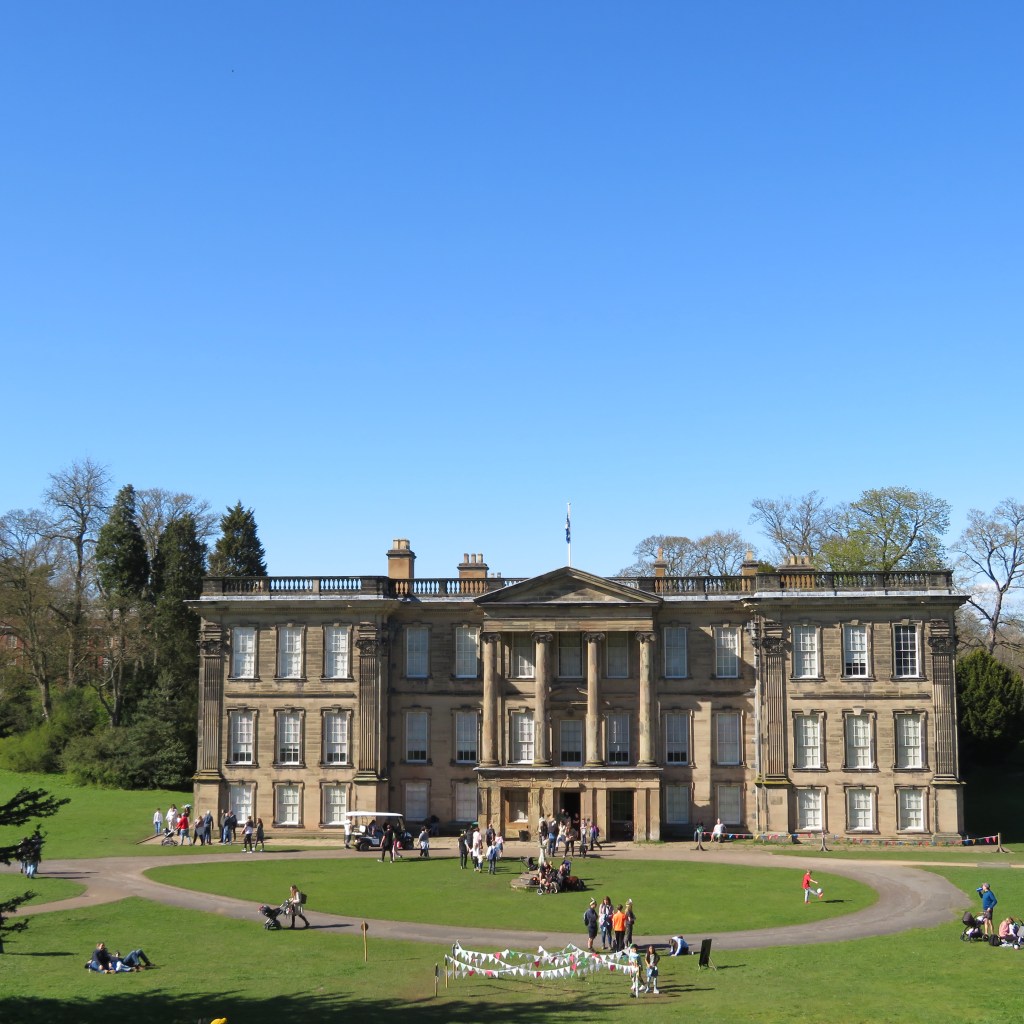
Calke Abbey is a grand historic country mansion under the care of the British National Trust in Derbyshire in England. Although it was never an Abbey, it was built on the site of an Augustinian priory in the early years of the 18th century. The priory was dissolved in 1536 by Henry VIII in his infamous grab of the assets of the Catholic orders to increase Crown income and to fund his military campaigns. In 1622, ownership of the estate passed on, first to Sir Henry Harpur (1st Baronet) son of a wealthy lawyer, and thence down generations to John Harpur (4th Baronet and sometime High Sheriff of Derbyshire, and perhaps friend of the Sheriff of Nottingham) who rebuilt it between 1701 and 1704 to the present configuration. In 1985, economic demands, most notably death duties that even barons could not escape, eventually forced the inheritors to transfer ownership of Calke Abbey to the National Trust.
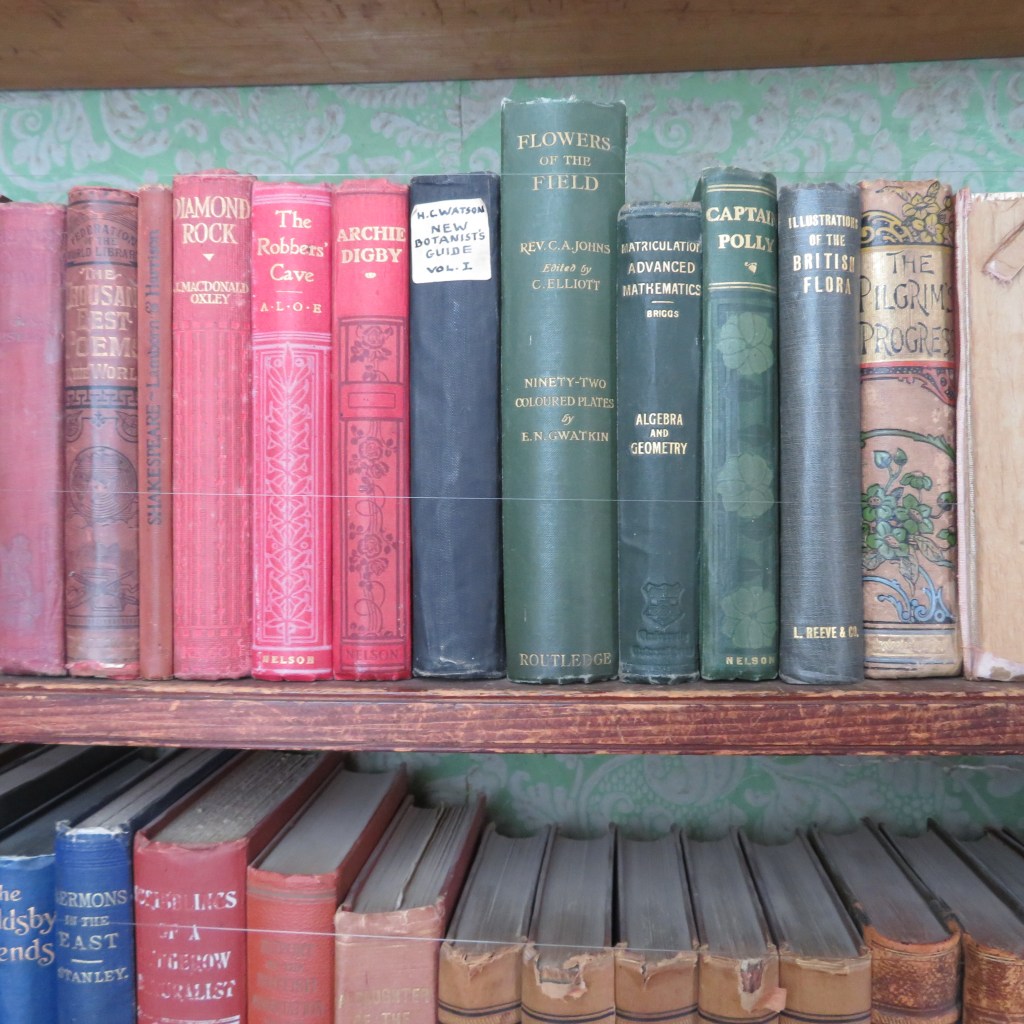
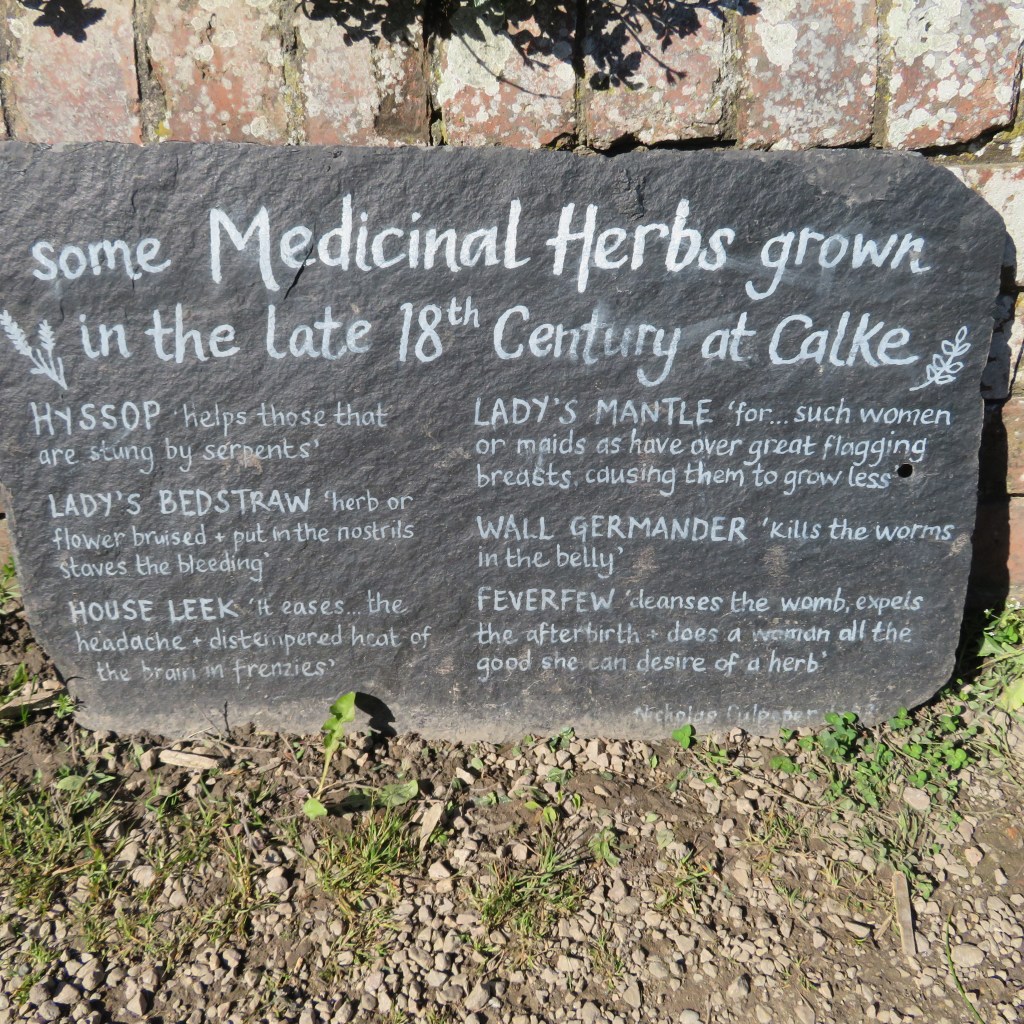
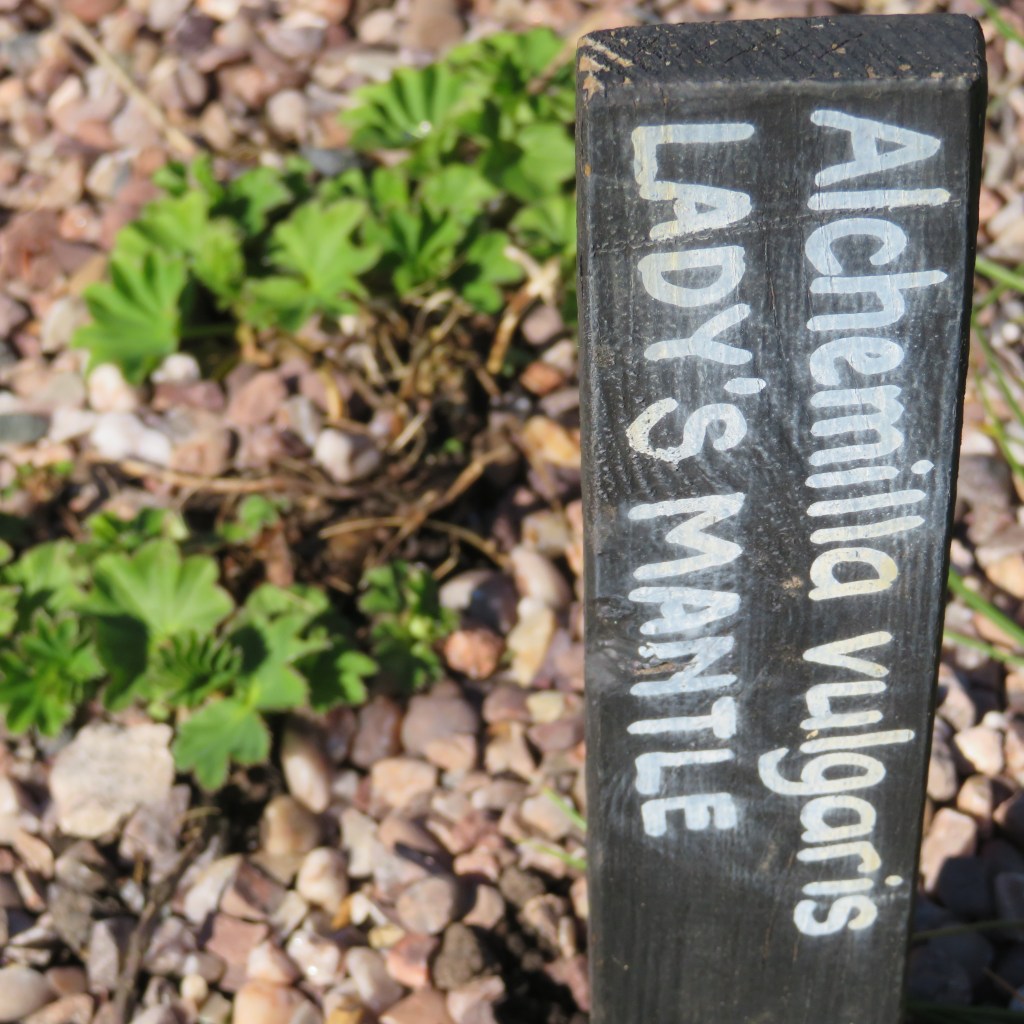
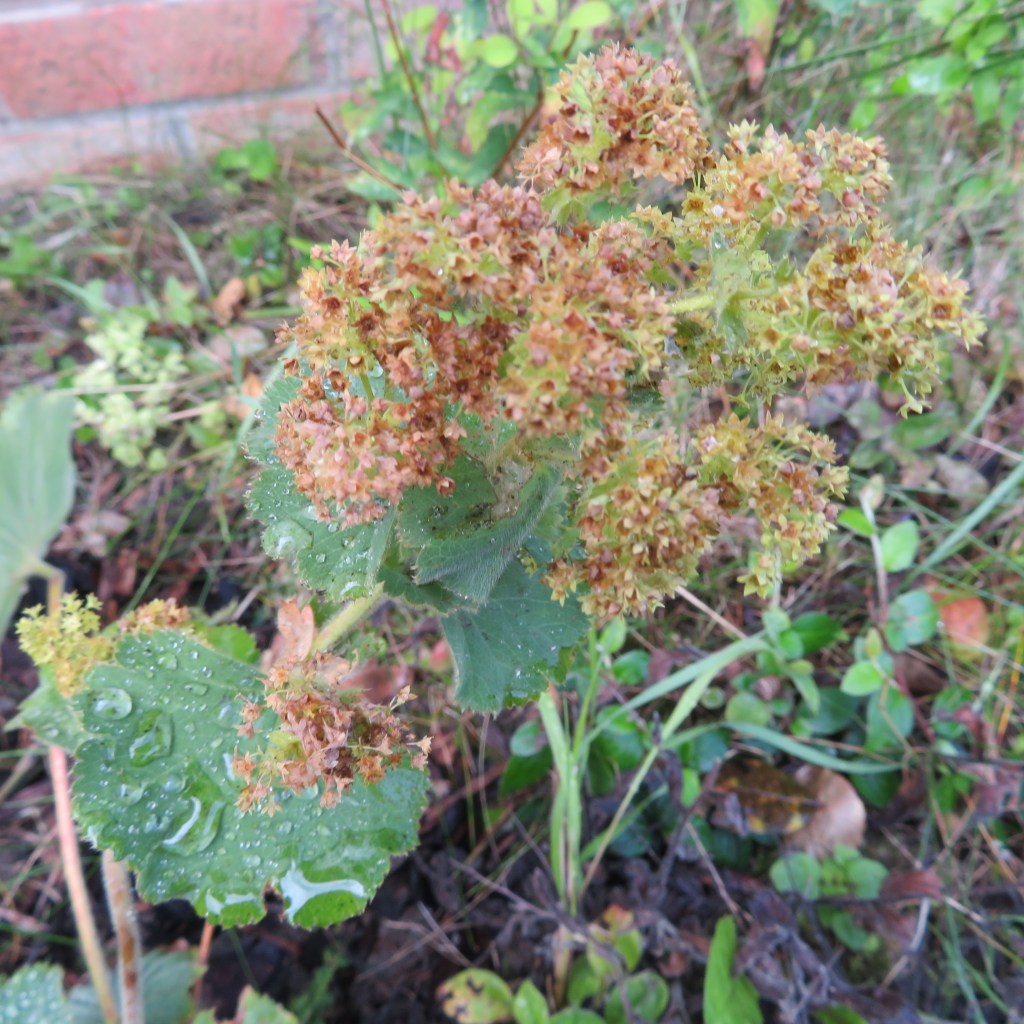
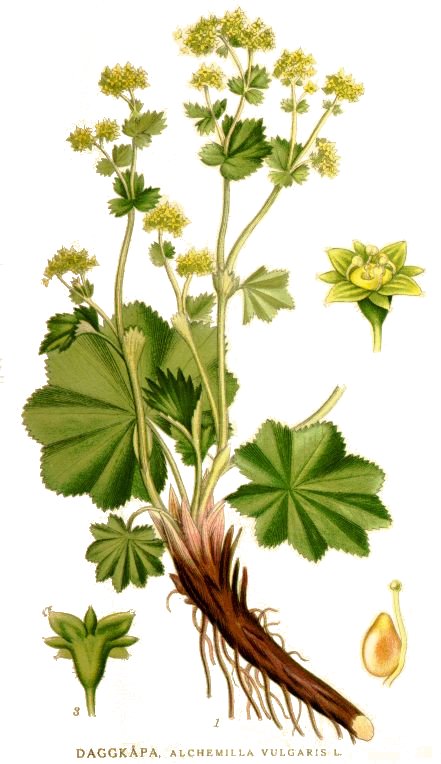
The beautiful sprawling estate, open to all visitors, is only about 20 miles from my home and in early spring this year, I went for a return visit after more than a decade, being particularly interested in its garden, part of which is devoted to medicinal plants that were grown there in the late 18th Century. The Harpurs were keen gardeners as their bookshelves show (see photo). Among their medicinal plants is Alchemilla vulgaris (Alchemilla xanthochlora) with flowers that are reputedly useful as a tea for a range of gynaecological conditions such as menorrhagia. I was particularly intrigued by the claim that the Alchemilla was ‘for such women or maids as have over great flagging breasts causing them to grow less’. Some have argued that other species of Alchemilla (alpina and xanthochlora) are the medicinal ones, but I am happy to take the word of the Calke Abbey gardeners. As far as I can find, none of these claims has been validated for any Alchemilla except through personal testimonies.
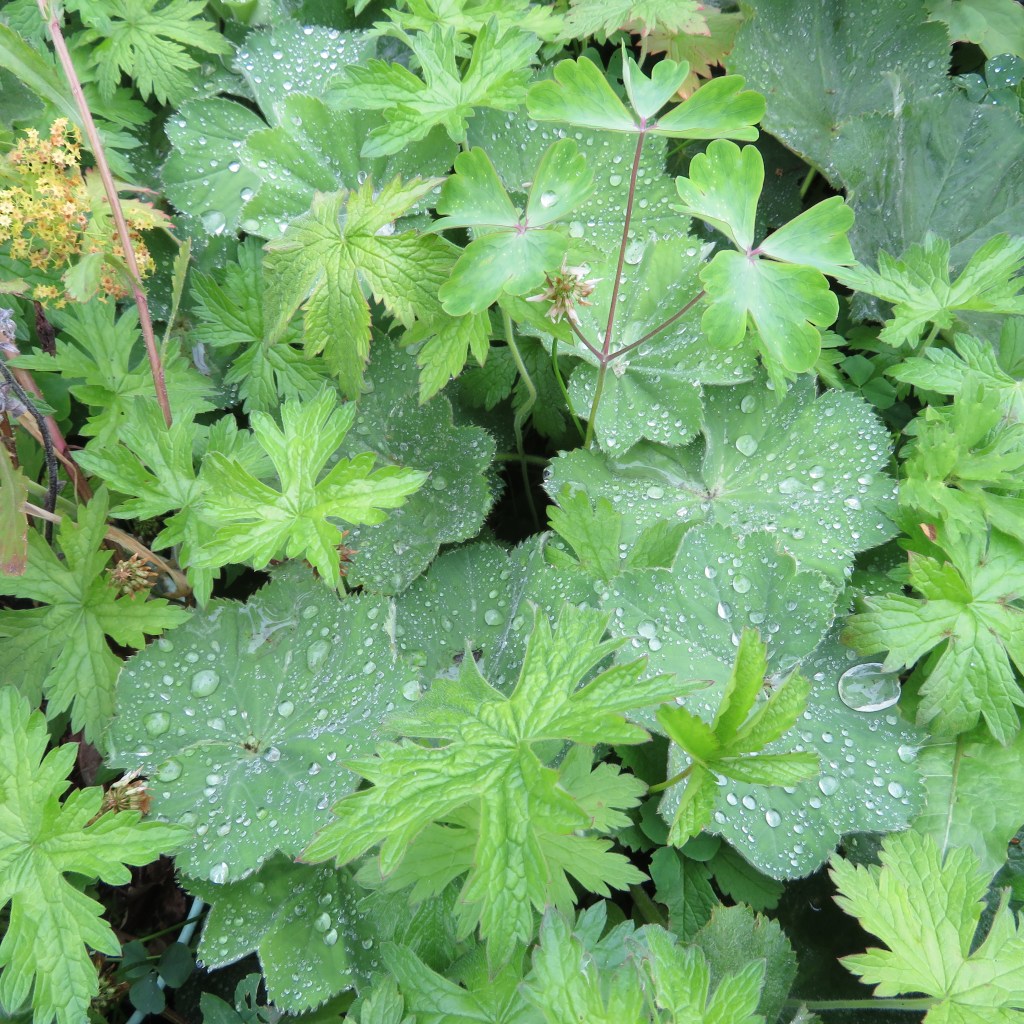
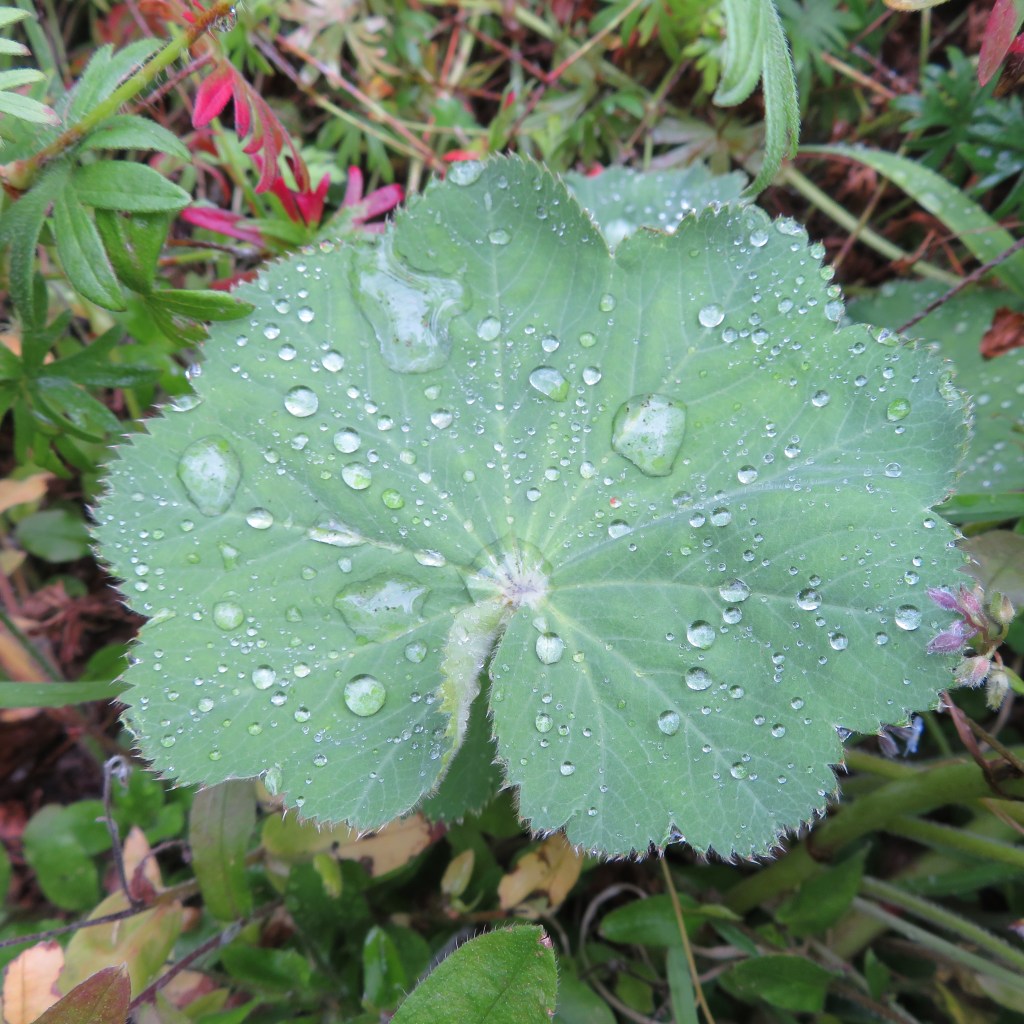
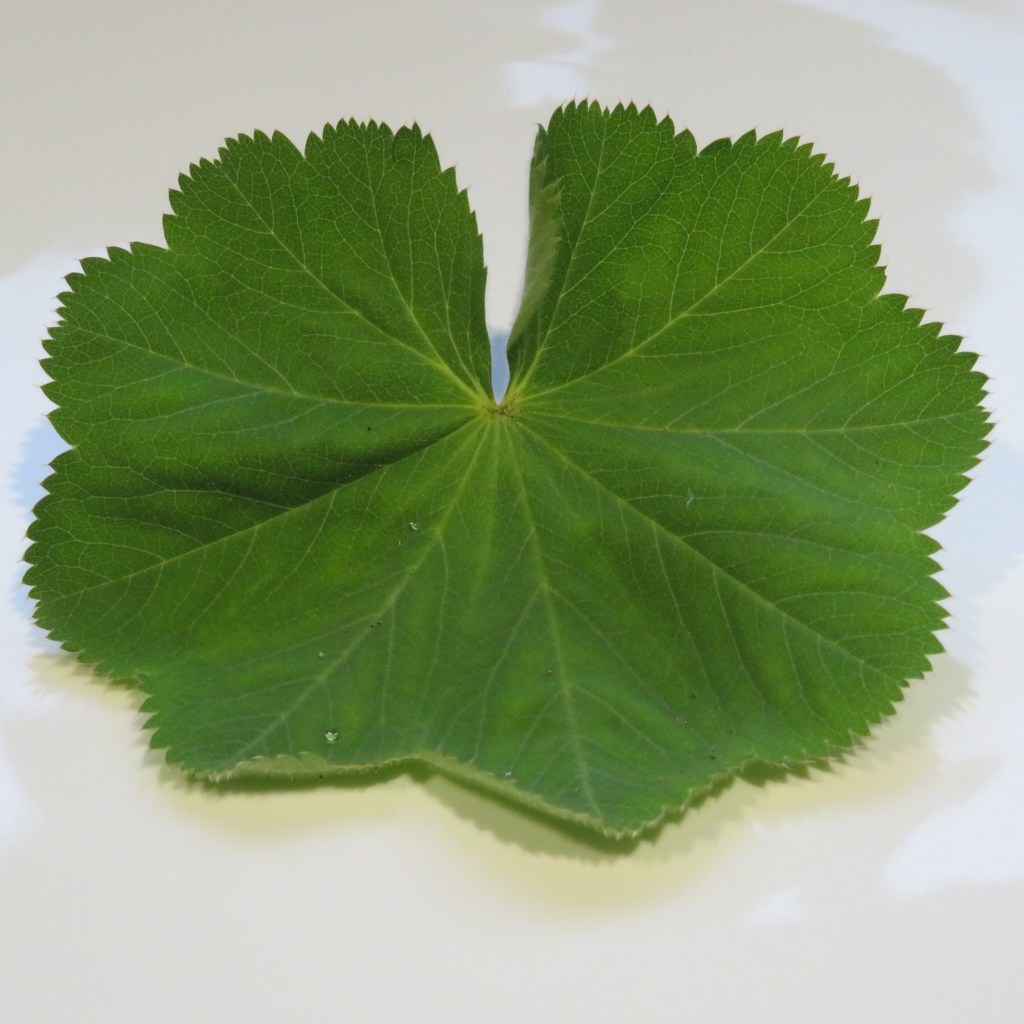
One species that grows well, some say too well, in British gardens, including mine, is Alchemilla mollis which fights for space with the equally wild perennial geraniums. Its beautiful leaf traps the rain with the tiny hairs on its surface (see Photos from my garden). The trapped raindrops are said by the ancient alchemists (hence the name Alchemilla for the plant) to be the purest form of water as a medium for their transmutations. Perhaps this trapping of the raindrops also earned the plant the name Lady’s Mantle.
Phylogenetics of the living world shows that the Alchemilla is of the Rosaceae family and related to other family members including the roses (of course), the hawthorn, the blackberry, and the lovely cherry blossom and plum tree (see previous post). Nature’s alchemists at work, indeed.
Photo Credits: ALWP CEBP except for the last one from Wikipedia
 Medicine Trees
Leave a comment