Jesuit missionaries, keen students of the natural world, followed their compatriot explorers soon after they found their way West across the Atlantic and East around the Cape of Good Hope.
The Portuguese, first around the Cape of Good Hope, were also the first to establish a thriving European maritime Empire in the East. The Jesuit João de Loureiro(1717 – 1791), sent to Gao at the peak of the Empire set about identifying medicinal plants used by the natives there and more particularly in Cochinchina (Vietnam) where he spent 35 years gaining respect that led to his appointment as mathematician and naturalist to the king of Đàng Trong. It is said that in Loureiro’s Royal garden were some 1000 medical plants which he catalogued using the new binomial system (1735) developed by Carl Linnaeus (1707-1778).
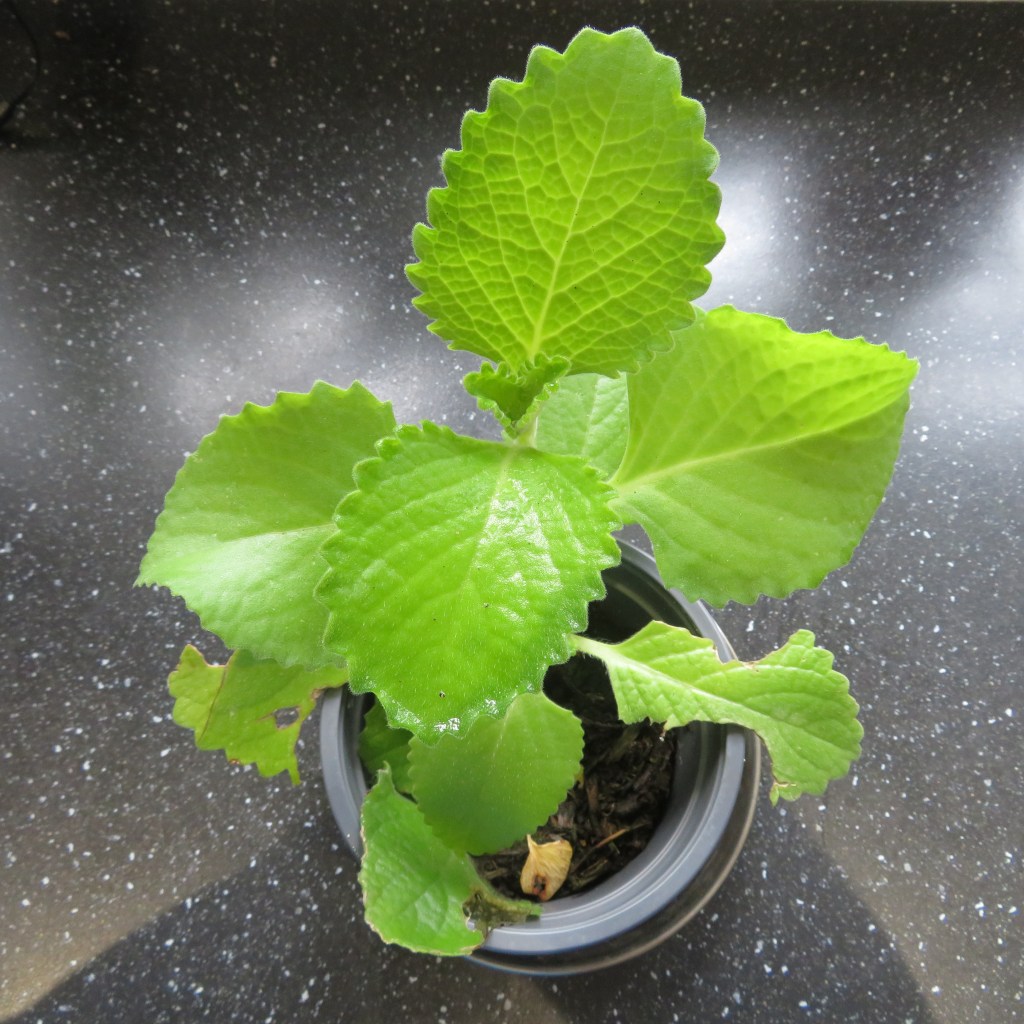
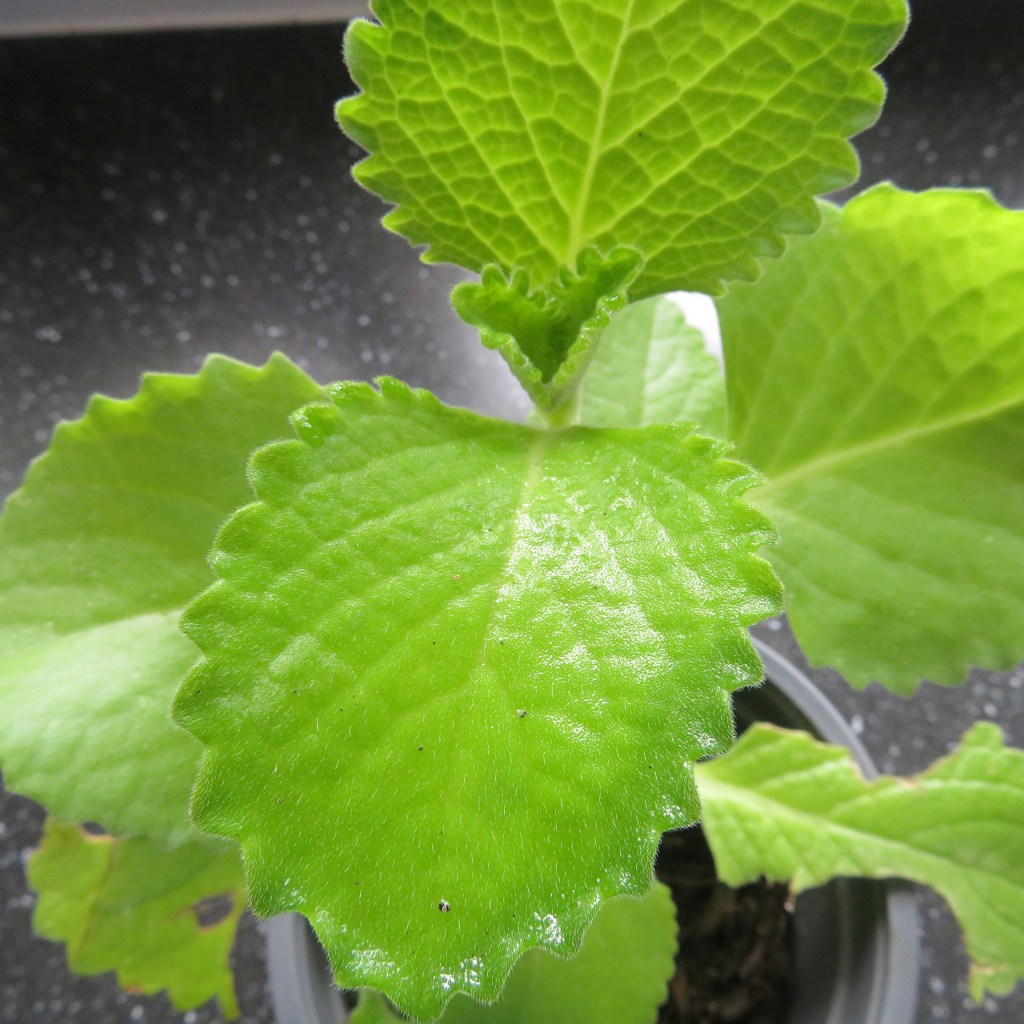
One of the aromatic plants Loureiro described was Coleus amboinicus (Plectranthus amboinensis), a plant described as a species with fleshy and very aromatic leaves. I had not come across this plant of the mint family (Lamiaceae) until Clairette Ng posted on it here a while ago, reporting that she used it as a thyme substitute. I was intrigued and Clairette kindly offered to send me a specimen for my garden. However, as she was in Mauritius and I, in the English Midlands, and reading that the plant could be grown here, I set about buying an inexpensive bare-root cutting which arrived wrapped in a tissue by second class post.
The tiny cutting has thrived in the open in my garden since I potted it, and I can vouch that it tastes remarkably like thyme. As the photos show, slugs and snails like it too. I have yet to use it in cooking (a pasta sauce or a salsa perhaps?) and the plant has yet to flower. Clairette indicated that the plant was easily propagated and that too I have proof of. I now have, from my original, a rooted cutting which I shall leave outside, but sheltered under muslin, to brave the English winter. With the first threat of frost this year (15 October 2023) I have brought my original cutting indoors to sit on a windowsill. I hope to report on both at some future date.
Do I believe in its medicinal properties (colds and sniffles)? Not really, but it should make a fragrant tea infusion. Why not? It is probably as good a placebo as many other widely sold over-the counter remedies such as Honey and Lemon mixtures. I prefer my Camelia sinensis brew.
Note that although the plant, as mentioned by Clairette, is called Baume de Pérou in Mauritius, it is not the same as Balsam of Peru, a commonly used component of pharmaceutical formulations obtained from the trunk of the tree Myroxylon balsamum. The Balsam of Peru is also used to flavour foods and fragrances but for the latter, it is not best avoided as it is often associated with skin allergies.
If you have liked this post, please forward it on to your Facebook friends by pressing on the Share button and invite your friends to join. Thank you. Si vous avez aimé cet article, transmettez-le à vos amis Facebook en appuyant sur le bouton Partager et invitez vos amis à nous rejoindre. Merci.
#ColeusAmboinicus #PlectranthusAmboinensis #Lamiaceae #MintFamily #SageFamily#IndianBorage #CountryBorage #FrenchThyme #IndianMint #MexicanMint #CubanOregano #SoupMint #VicksPlant #SpanishThyme #BaumeDePérou #BalsamofPeru #MedicineTrees #MedicinalHerbs #MedicinalPlants #HerbalMedicine #PlantMedicine #HerbalTeas #FolkloreRemedies #TakingLeadFromNature #Jesuits #JoãodeLoureiro #PortugueseMaritimeEmpire
Photo Credits – ALWP CEBP
 Medicine Trees
Leave a comment