Last November, I revisited one of the World’s historic gardens, which is sometimes listed as ‘one of the must-see gardens before you die’. The Garden in Mauritius, steeped in colonial history, was started in 1735/6 as a vegetable garden by Mahé de La Bourdonnais (1699 – 1753), the most illustrious of the island’s French Governors. It then evolved into a botanic garden under the trainee-missionary turned entrepreneur and later Intendant, Pierre Poivre (1719 – 1786). He had a clear objective in mind – the acclimatisation of foreign plants to break the Dutch monopoly of the lucrative spice trade. To help, his employers, the French East India Company, appointed a trained expert, Jean Baptiste Fusée-Aublet, as company botanist and the island’s first Compounding Apothecary (Botaniste et premier Apothicaire-compositeur).
The brief given to Fusée-Aublet was clear:
1. To establish a laboratory to supply medicines (at the time largely made up of plants herbals) to its trading stations (comptoirs) and 2. To create a garden that would assemble plants of benefit to the island as food for both man and animals and to supply them as victuals to French ships during their stopovers on their long voyages from France to Asia.
One of the enduring names from that French period in the island’s history is Nicolas Céré who first introduced many medical plants to the Garden, including Artemisia absinthium (which we covered in one of our previous posts), the senna plant (Cassia acutifolia), the poppy (Papaver somniferum, previous post) and the belladonna (Atropa belladonna), the source of the still widely used drugs, atropine (anticholinergic) and hyoscine (travel sickness). Charles A. O’Connor (Garden director, 1913-1917 and 1924-1944), better known for his conversion of the large fishpond into a much-admired giant lotus (Victoria amazonica) pond, added other medicinal plants including Hydrocarpus kurzii, a plant producing an oil used for the treatment of leprosy before being displaced by newer synthetic drugs such as dapsone.
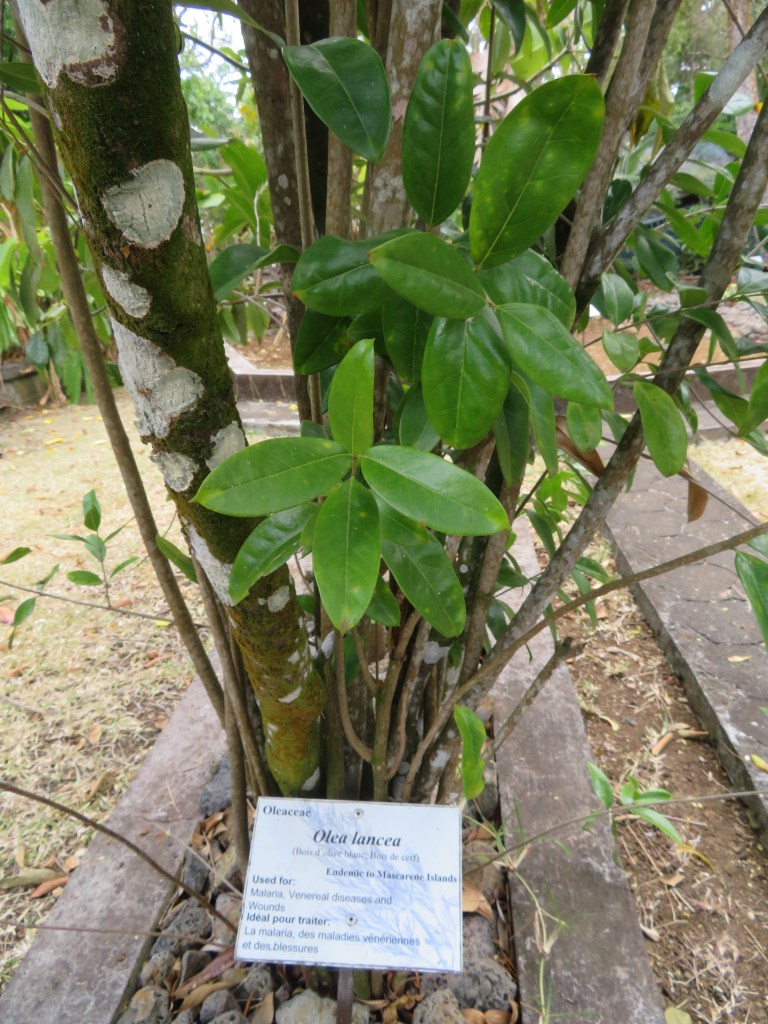
Today, in a corner to the left of the imposing Mon Plaisir Colonial building is a Medicinal Garden. Among the plants was an olive tree species which I had not noticed before. The label said Olea lancea (Bois d’olive blanc, Bois de cerf) used for the treatment of malaria, venereal diseases, and wounds. Normally I would have taken this given identity of the plant for granted. However, when I visited, the medicinal garden was not well maintained, with labels and plants missing. So, I took photographs for later research.
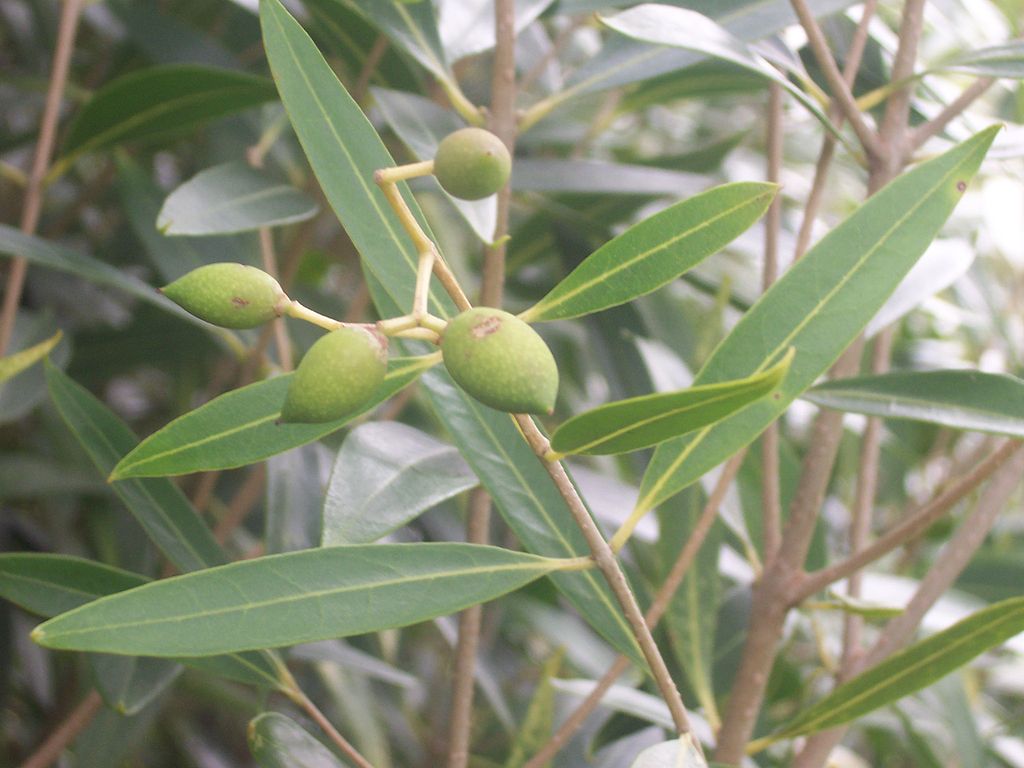
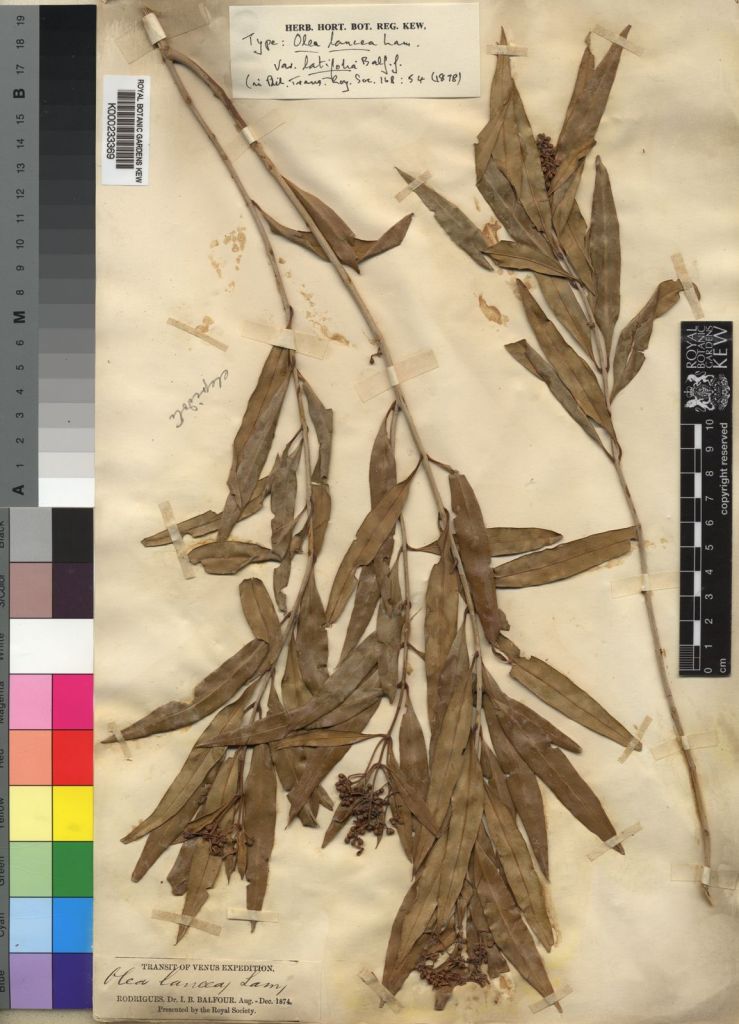
Wikipedia, in its very sparse entry, provided a photo of a plant that did not look like the tree at Pamplemousses. The French Inventaire National du Patrimoine Naturel (IPN) includes Olea lancea in its red list of endangered plants. The plant was seemingly recorded by Jean-Baptiste de Lamarck, well known for his theory of transmission of acquired characteristics in contrast to Darwin’s theory of the origin of species with random mutation and selection. Frustratingly, every photograph of the living plant that I found for Olea lancea did not match the tree in Pamplemousses Garden.
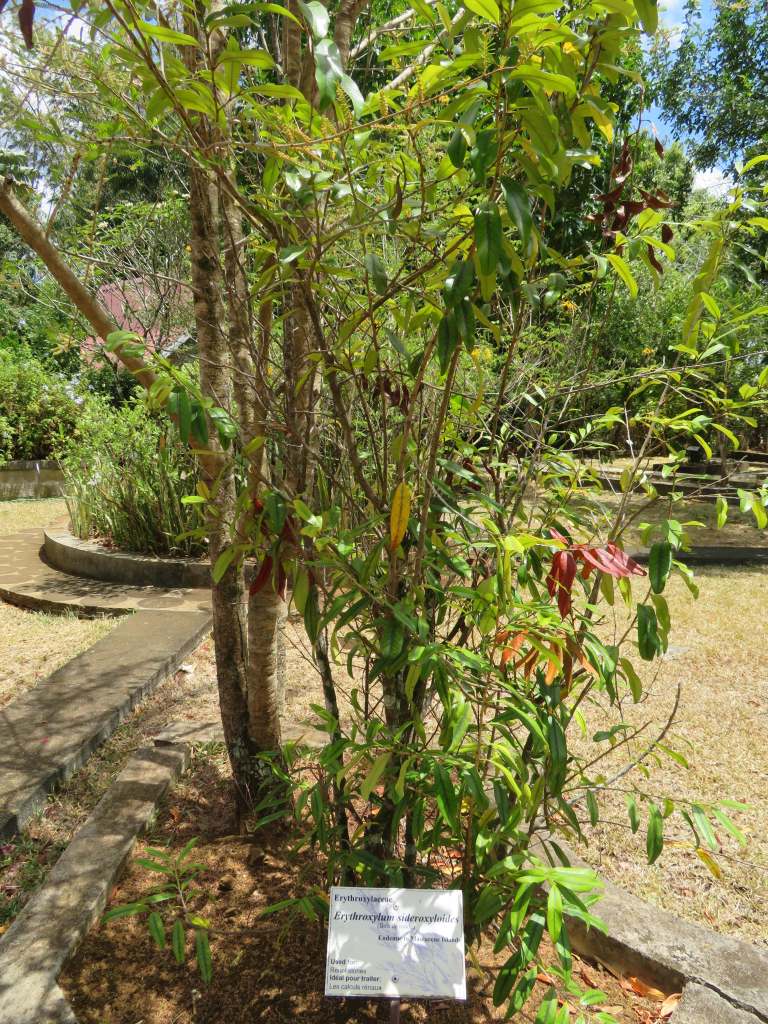
Close to the tree I found another labelled Erythroxylum sideroxyloides with leaves that looked closer to those of the olive Olea lancea. Could there have been an unfortunate label swap? Can any of you help with identification of the plant labelled Olea lancea at Pamplemousses? Is it indeed an Oleo lancea? Any further information you can provide would be helpful. Perhaps the directors of the Pamplemousses Garden, now renamed the Sir Seewoosagur Ramgoolam Botanic Garden, could send specimens for genetic typing so that the DNA sequences could be compared with the reference sequences curated by the National Center for Biotechnology Information? This would confirm the identity of the plant at the much-admired botanic garden in Pamplemousses.
This example brings back to mind the episode when Pierre Poivre brought back nutmeg plants from the East Indies in the eighteenth century. It had to be certified as the true nutmeg. The expert, Fusée-Aublet, who was supposed to do the certification of the plant and seeds had never seen them as living objects. Therefore, he had to rely on secondary descriptions left by others. His inability to certify Poivre’s nutmegs led to a dispute, creating much bad blood between the two of them. Today DNA sequencing would provide the irrefutable evidence required.
More about the Pamplemousses Garden
When Pierre Poivre sold the Mon Plaisir estate back to the French Crown, the Garden became known as the Jardin du Roy. With the French Revolution and the rise to power of Napoleon, the name was no longer appropriate and fortunately, the Garden was not renamed after him but after the area where it was situated, Pamplemousses. The British took over the island in 1810 but, perhaps aware of the transience of Empires and of individuals, did not rename, and so for close to 200 years the name Jardin des Pamplemousses or Pamplemousses Garden stuck until it was changed to honour the island’s first Prime Minister in 1988.
Photo Credits – Photo 1 of the tree labelled Olea lancea in Pamplemousses (Alain Li Wan Po CEBP); Photo 2 (Wikipedia entry for Olea lancea); Photo 3 (Plants of the World Kew Gardens herbarium sample for Olea lacea); Photo 4 (Alain Li Wan Po photo of tree labelled Erythroxylum sideroxyloides in Pamplemousses; Photo 5 (Plants of the World, Kew gardens herbarium specimen forErythroxylum sideroxyloides.
#MedicineTrees #MedicinalHerbs #MedicinalPlants #HerbalMedicine #PlantMedicine #FolkloreRemedies #TakingLeadFromNature #OleaLancea #OliveSpecies #NCBI #ErythroxylumSideroxyloides #PamplemoussesBotanicGarden #JardinDePierrePoivre #JardinRoyalDesPlantesMédicinales #JardinDesPlantes # NationalCenterforBiotechnologyInformation #NCBI ##JardinduRoy #SirSeewoosagurRamgoolamBotanicGarden #LeJardinDesPamplemousses

 Medicine Trees
Leave a comment