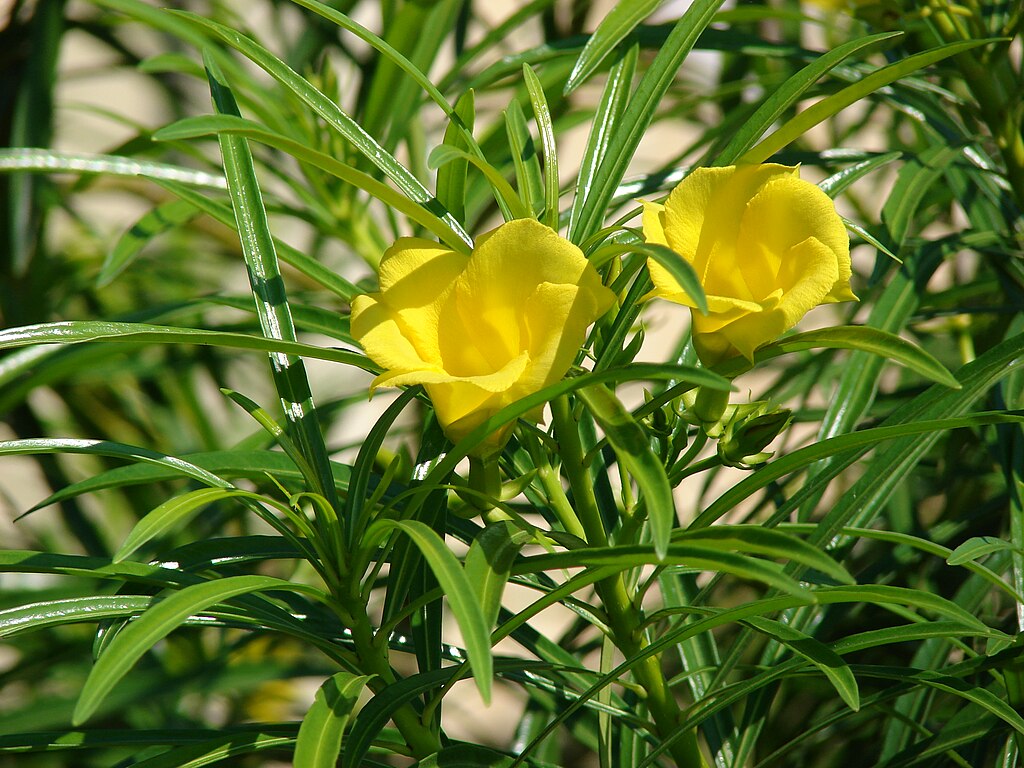
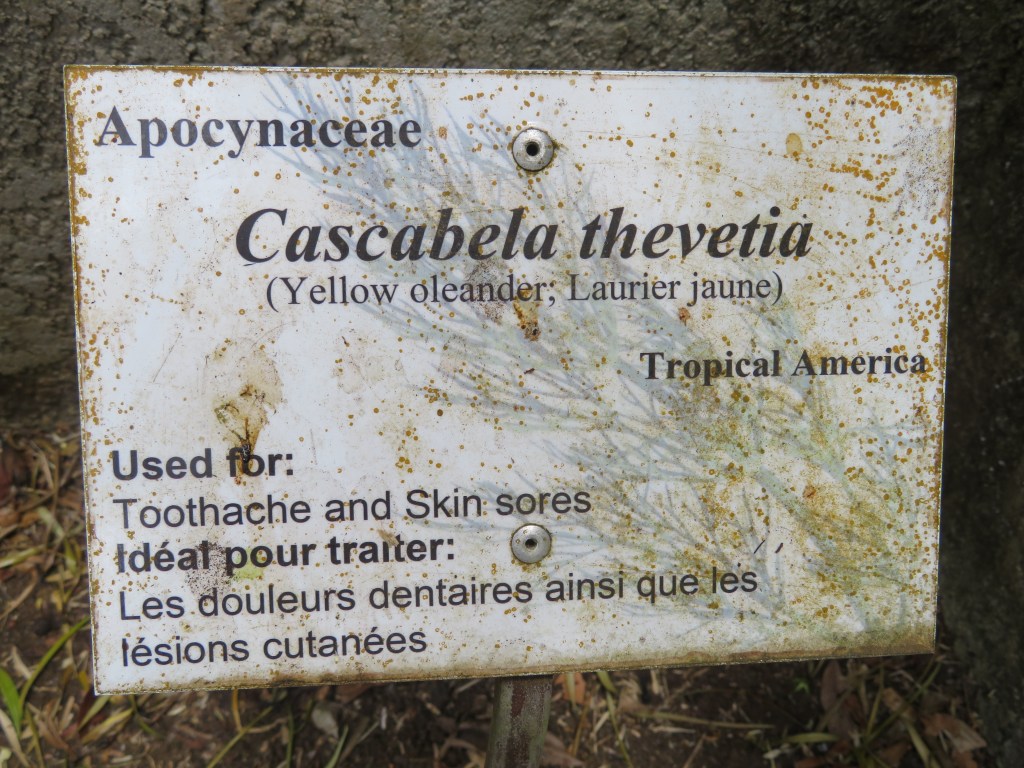
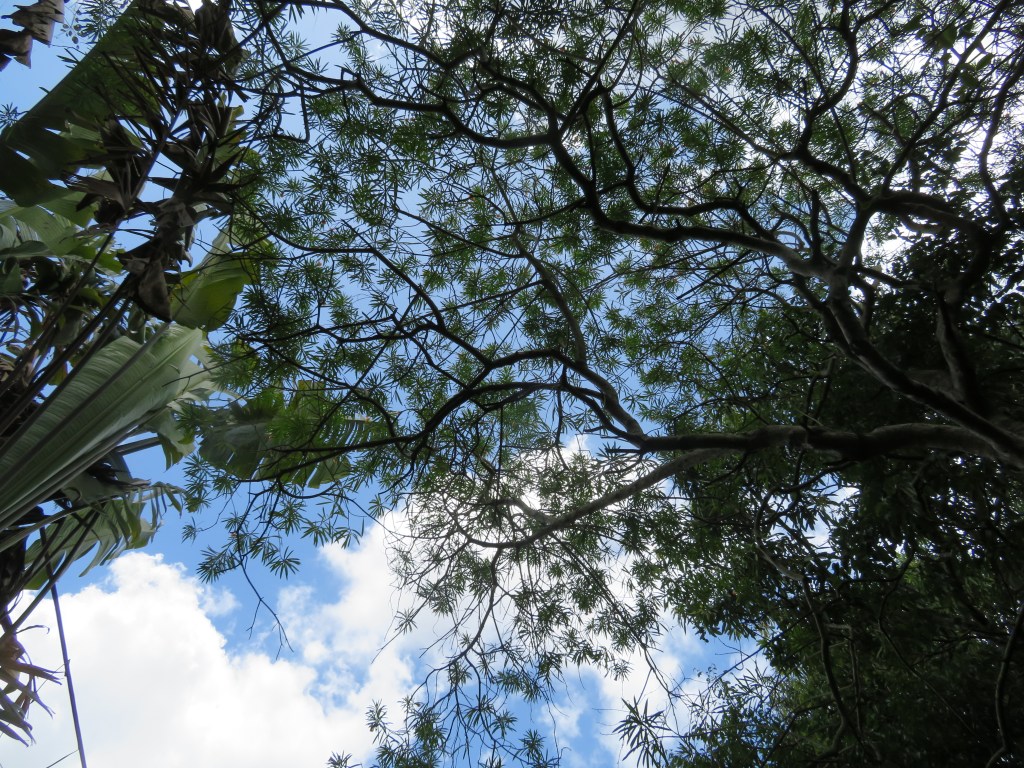
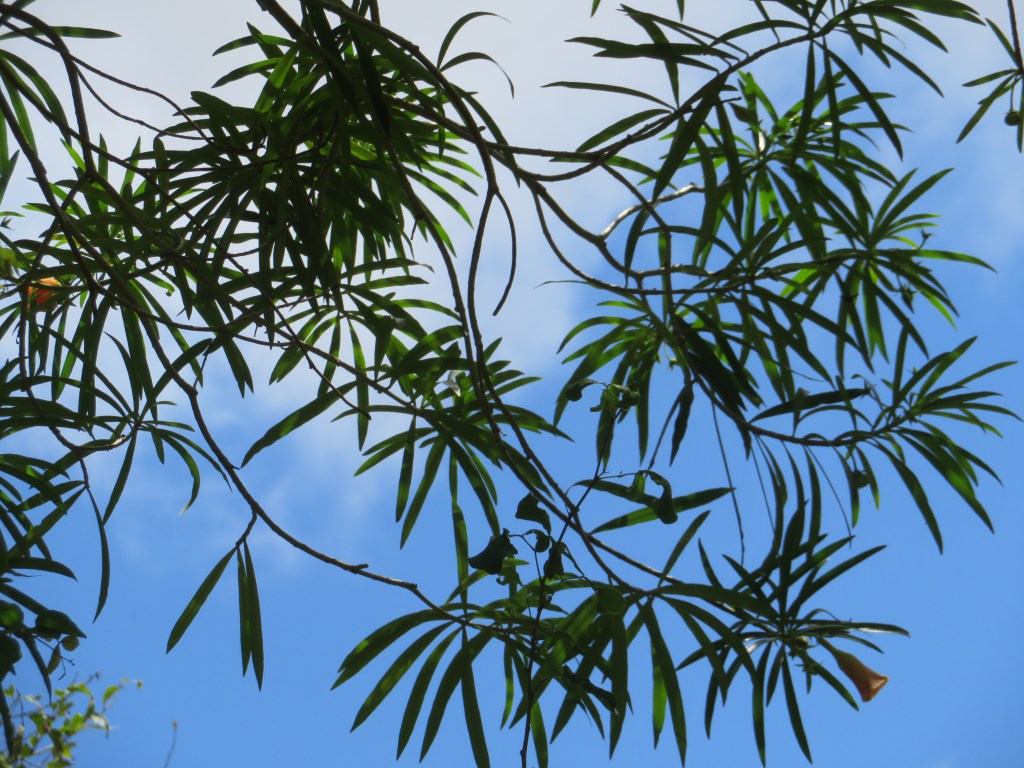
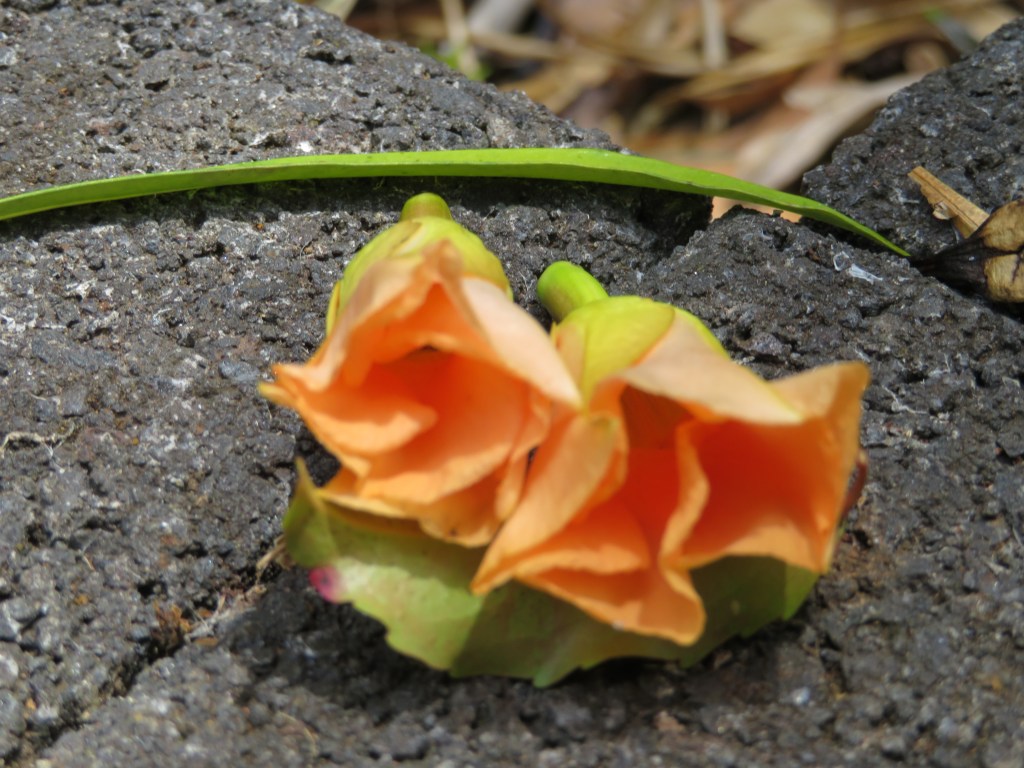
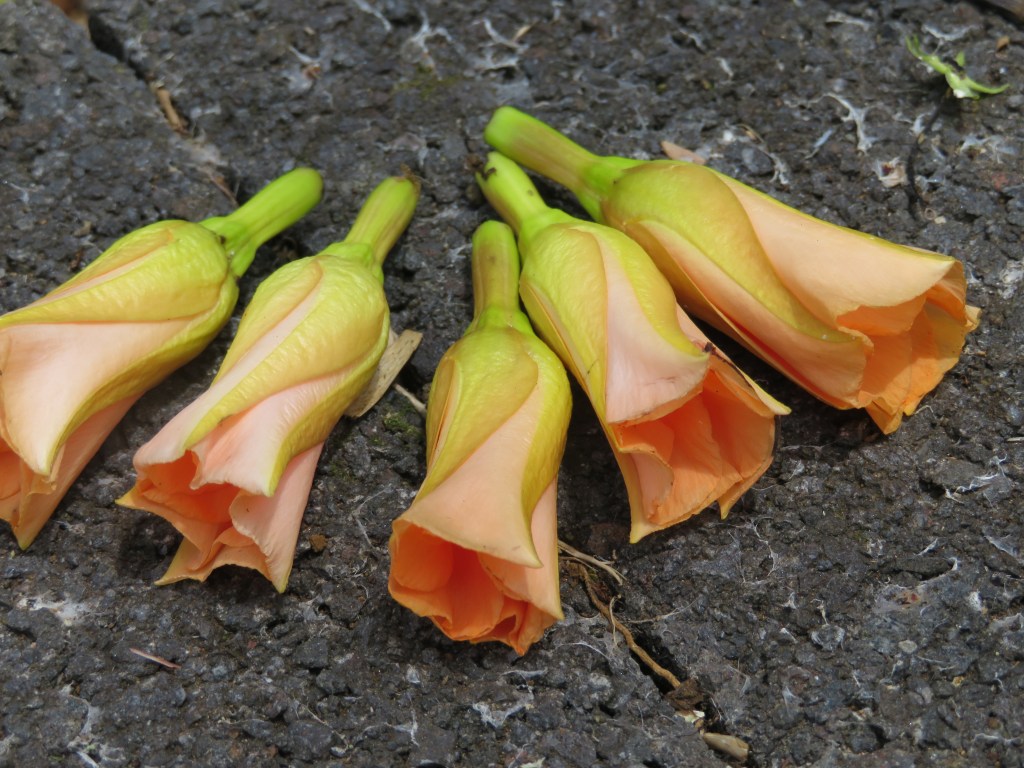
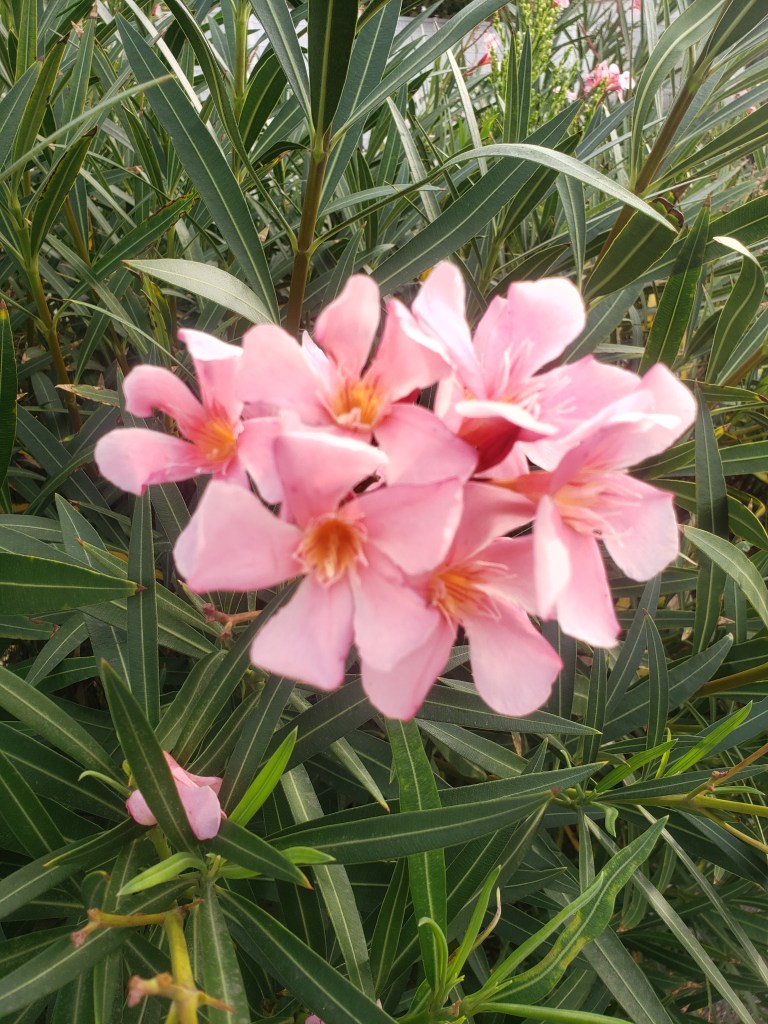
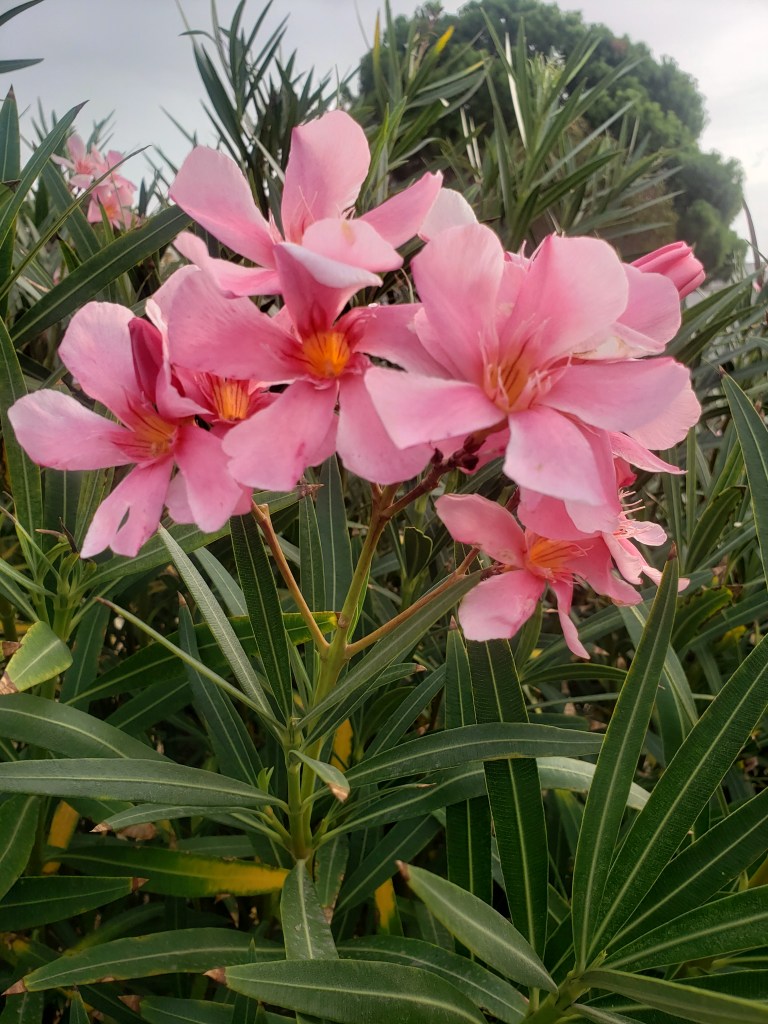
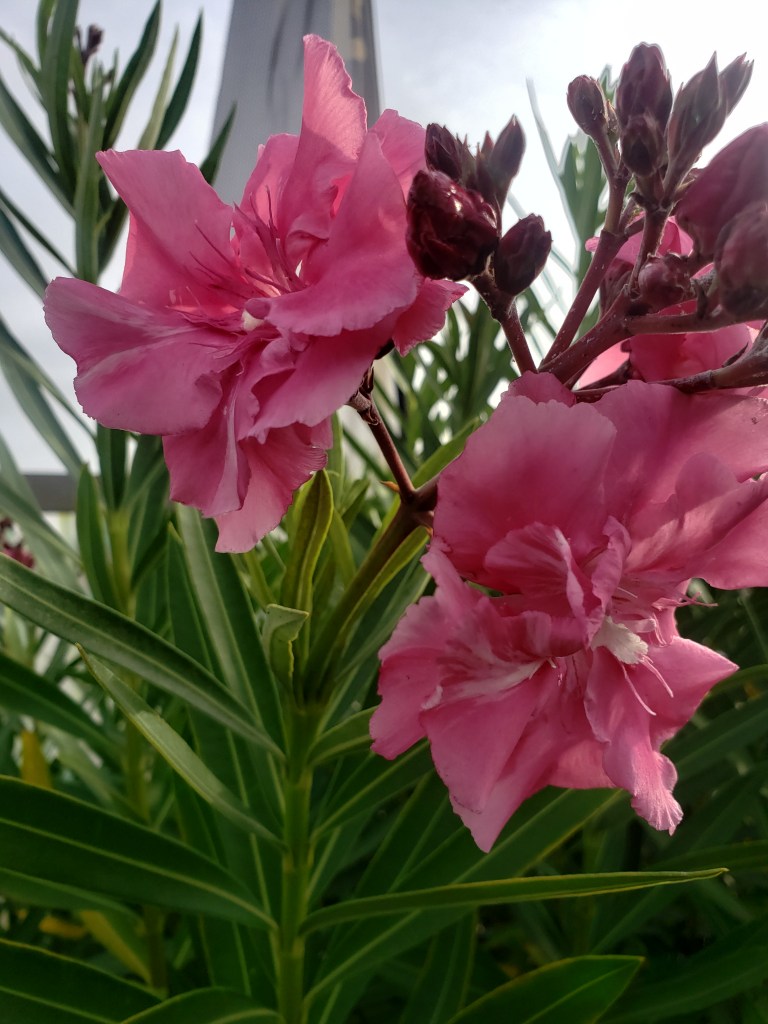
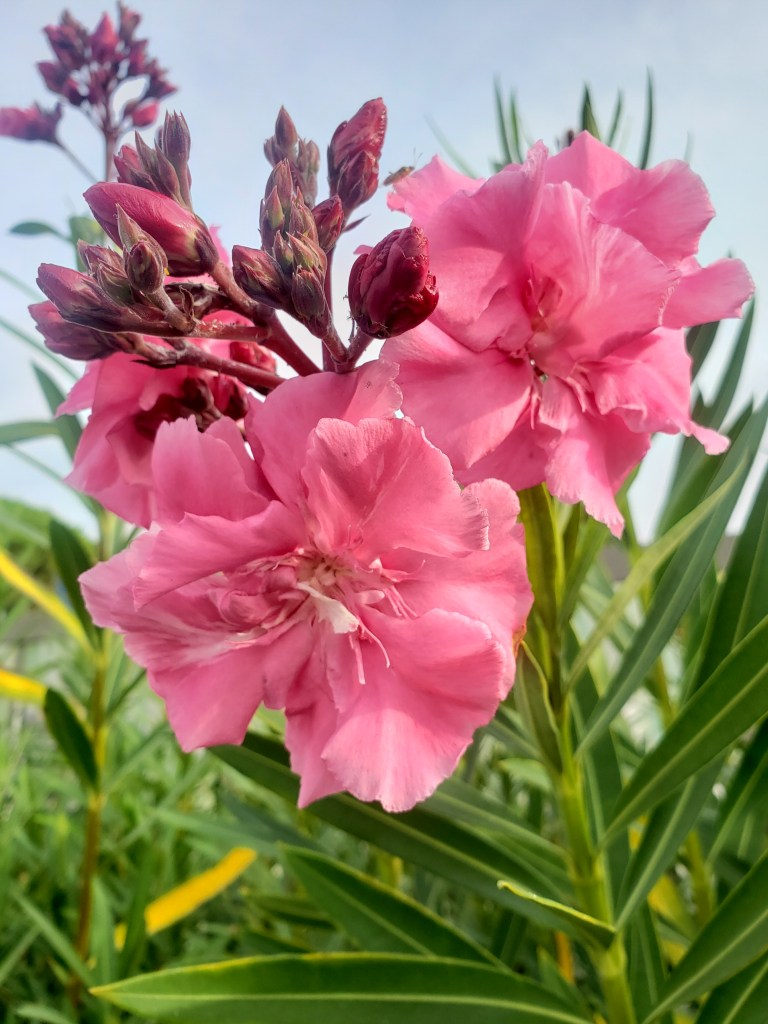
During a visit to the Mauritius Pamplemousses Botanical Garden in November 2022, I came across a tall plant with attractive yellow flowers labelled Cascabela thevetia (Yellow Oleander, Laurier jaune). The name is probably derived from the Spanish ‘cascabel’ which means ‘jingle bell’; an apropriate name given the shape of the flowers (see photos). Most of us are more familiar with Cascabela species with pink to red flowers (see photos of beautiful specimens taken on the Côte d’Azur in autumn 2023).
The label of the Cascabela thevetia in Pamplemousses suggested that it is ‘ideal for treating dental pain and some skin lesions’. All of these indications are of course part of folklore rather than scientifically validated. Beyond the shores of Mauritius, yellow oleander came to recent wider attention as an adulterant, substituent or additive in herbal slimming products, causing a number of poisonings, sufficiently severe for the US Food and Drug Administration and other health organisations to issue Health Alerts.
All parts of Cascabela thevetia are poisonous due to their cardenolide content including thevetin A. The cardenolides are cardioactive compounds that include the drugs digoxin and digitoxin which we discussed in an earlier post on plants of the foxglove (digitalis) family. Symptoms of toxicity include ‘neurologic, gastrointestinal, and cardiovascular adverse effects that may be severe, or even fatal. Symptoms may include nausea, vomiting, dizziness, diarrhea, abdominal pain, cardiac changes, and dysrhythmia’, warned the FDA.
Cascabela was found in products purported to contain Crataegus mexicana (tejocote), and in products marketed enticingly as ‘natural’ with descriptors such as ‘Nuez de la India, ‘botanical food,’ ‘India Nuts for Weight Loss,’ ‘slimming seeds,’ ‘India seeds for weight loss, or ‘diet seeds.’. Cartaegus species and extracts have been used for the treatment of heart failure and are also claimed to promote slimming,
Crataegus mexicana (tejocote or Mexican hawthorn) is a species of hawthorn, several of which have been used medicinally since ancient times including in the treatment of heart failure owing to their strengthening of the pumping action of the heart (positive inotropic effects), an effect which its constituents share with digoxin, other foxglove compounds, and cardenolides present in Cascabela mexicana. Standardised extracts of the plant are available in Europe for prescription and there is a European Union Monograph which recognises the use of Cratageus leaf and flower as a ‘Traditional herbal medicinal product to relieve symptoms of temporary nervous cardiac complaints (e.g. palpitations, perceived extra heart beat due to mild anxiety) after serious conditions have been excluded by a medical doctor.’ Regulatory experts from all EU Member States did not all agree on this use when the monograph was proposed.
Given the cardioactivity of components of both Cascabela thevetia and Crataegus Mexicana, it is not surprising that they share the same toxicity and synergise each other’s action when combined in the same product. In a case-report of poisoning of a 16-year-old girl with a Cratageus root ‘anti-slimming’ preparation, a test for digoxin was positive suggesting either adulteration of the product or cross-reactivity of the components in the analysis.
Even in the age of Wegozy (semaglutide) and related compounds (GLP-1 receptor agonists), so favoured by the well-healed, the allure of a ‘natural’ herbal slimming product can be irresistible. Even if they work, dosing can be very difficult with such ‘natural’ products, and adulteration makes matters worse. So be careful and vigilant. Avoidance of such products is perhaps the best medicine.
Exercise and diet to lose weight … Yes, but these morsels of wisdom are so difficult to act on in practice and many still resort to herbal alternatives.
Further reading:
Berland N, Kababick J, Santos C, Calello DP. Notes from the Field: Online Weight Loss Supplements Labeled as Tejocote (Crataegus mexicana) Root, Substituted with Yellow Oleander (Cascabela thevetia) – United States, 2022. MMWR Morb Mortal Wkly Rep 2023;72:1016-7.
FDA (US Food and Drug Administration). FDA Expands Warning to Consumers About Toxic Yellow Oleander Purported to be Nuez de la India in Certain Botanical Weight Loss Products (https://www.fda.gov/…/fda-expands-warning-consumers…) 8 September 2023. Accessed 16 Jan 2024. 2023.
Previous Relevant Posts
1.Digitalis lanata – The source of the drug digoxin Part I
2.Natural hybridisation of foxgloves and Gregor Mendel – The man who made peas spill the beans
3.Hunting hawthorns for health and seeing seasons, swans, butterflies, and lamas
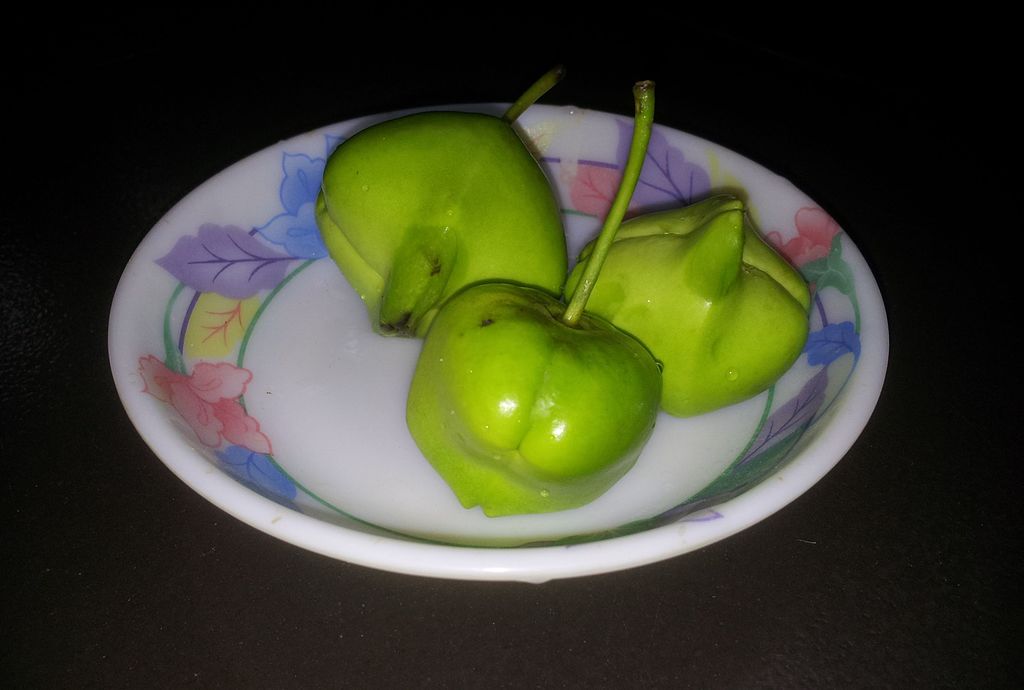
Photo credits: ALWP CEBP except for photos 1 and 2 showing Cascabela flowers and seeds (Wikipedia Commons)
#HealthAlert #MedicineTrees #MedicinalHerbs #MedicinalPlants #HerbalMedicine #PlantMedicine #HerbalTeas #FolkloreRemedies #TakingLeadFromNature #CascabelaThevetia #CrataegusMexicana #NaturalSlimming #Wegozy #Semaglutide #GLP1ReceptorAgonists #WeightControl #Obesity #SlimmingProducts #FDA #HealthAlert #DrugAdulteration #DrugSubstitution #HealthWarning #DrugInteraction #Hawthorn #MexicanHawthorn #Manzanita #Tejocotera #LaurierJaune #YellowOleander #Wygozy #Semaglutide #FDA #EMA #DrugRegulators #SafetyOfHerbals
 Medicine Trees
Leave a comment