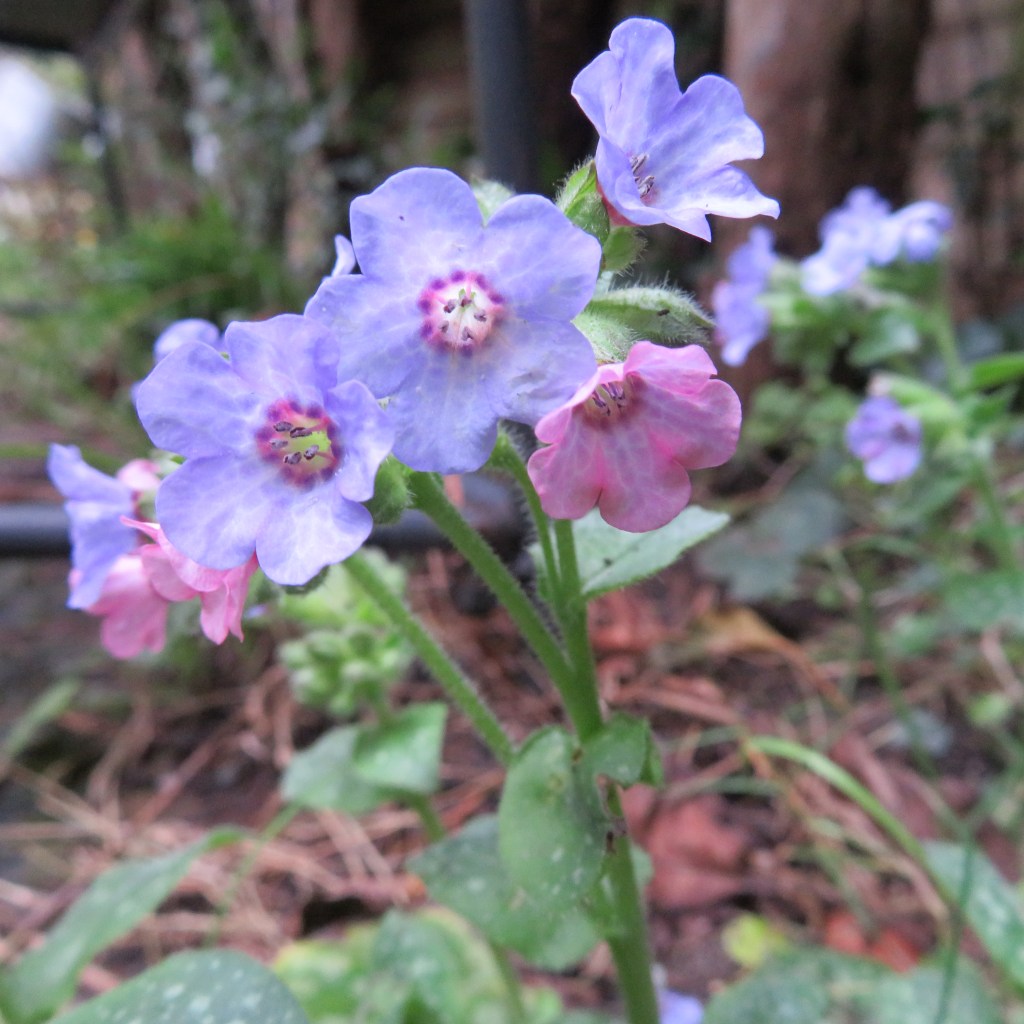
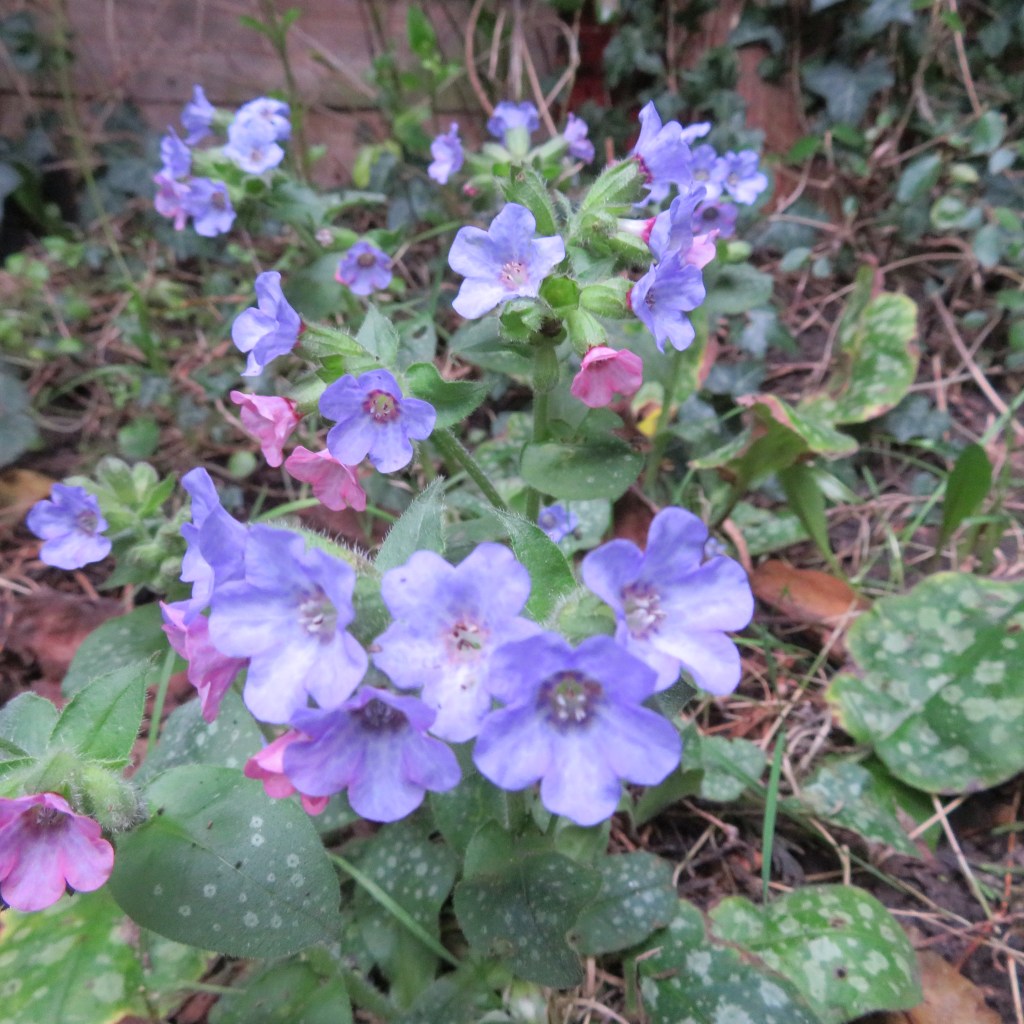
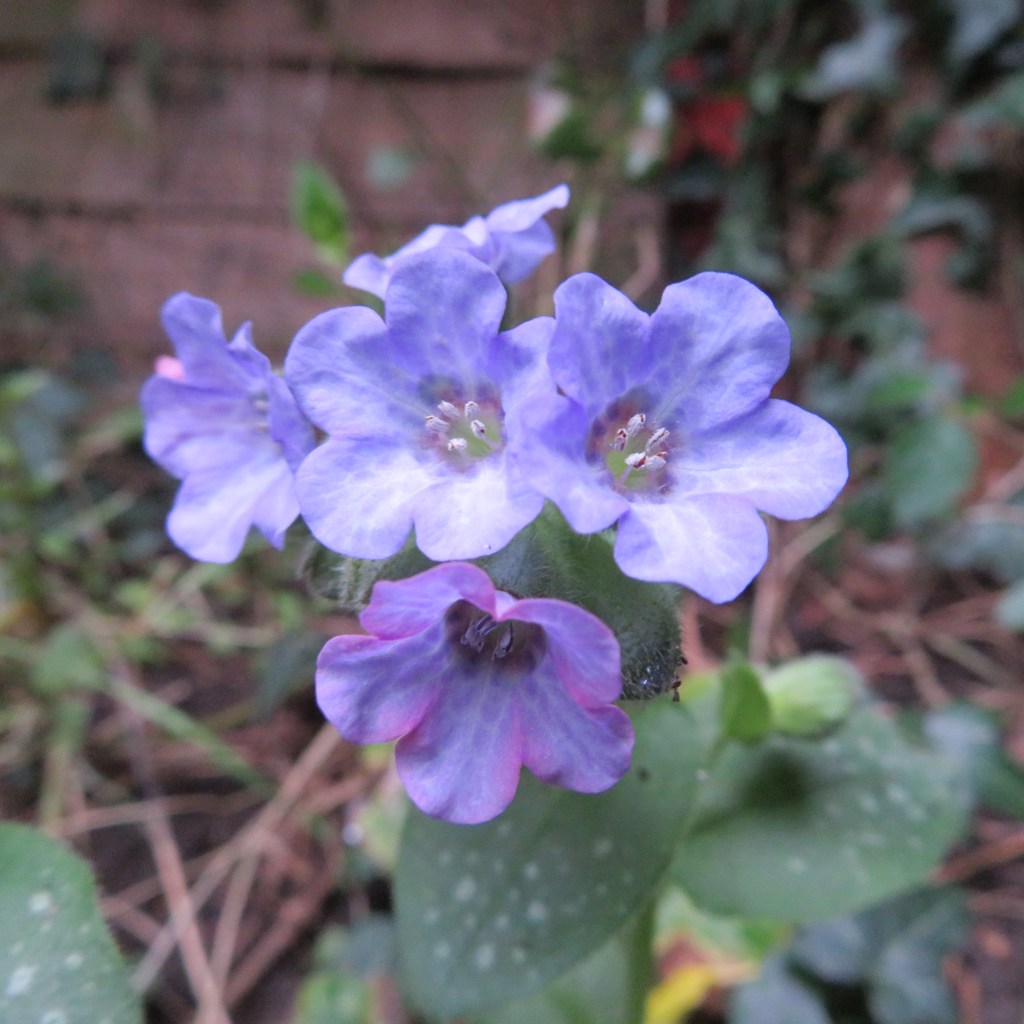
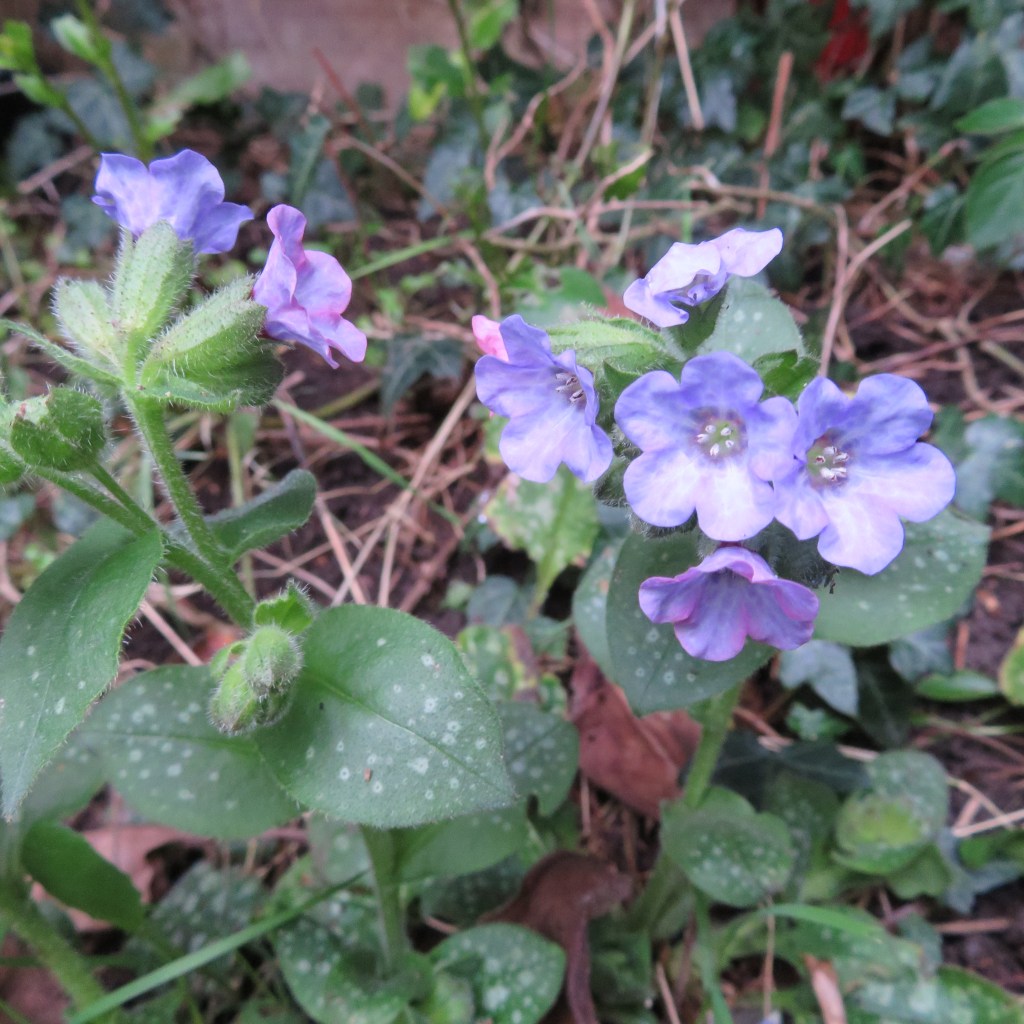
With a warm mid-February, spring is in the air in the English Midlands. The snowdrops are in full bloom and some other spring bulbs and a few camelias have followed. Walking around my soggy garden today (15 Feb), I came across a fine clump of lungwort in full bloom (see photos), hidden behind a garden bench.
Pulmonaria officinalis (lungwort), as its name suggests, has a history of use as a remedy for various pulmonary (lung) ailments. The descriptor ‘officinalis’ for this native European plant indicates that it was at once well-regarded as an herbal remedy. The spotted leaves are supposed to resemble diseased lung-tissue presumably observed in early autopsies of patients when tuberculosis was widespread throughout Europe.
There is no objective evidence that lungwort is useful for any of the pulmonary afflictions, but it does contain substances (pyrrolizidine alkaloids) that are known to be toxic to the liver and which may affect the foetus. Although the amounts of the toxic alkaloids present in lungwort are likely very small, the plant should be avoided as an herbal remedy given the poor risk-benefit trade-off. It is better to just enjoy the handsome plant as a bringer of joy and colour in the late winter garden.
I previously posted on the snowdrop (Galanthus nivalis), that other delightful late winter flower,as a source of galantamine, one of the early drugs for the symptomatic treatment of Alzheimer’s disease.
#MedicineTrees #MedicinalHerbs #MedicinalPlants #HerbalMedicine #PlantMedicine #HerbalTeas #FolkloreRemedies #TakingLeadFromNature #NaturalMedicines #Snowdrop #HerbsForLung #GalanthusNivalis #Galantamine #Alkaloids #Lungwort #PulmonariaOfficinalis #Hepatotoxicity #PyrrolizidineAlkaloids #PlantTeratogens #PlantHepatotoxins
Photo Credit: ALWP CEBP


 Medicine Trees
Leave a comment