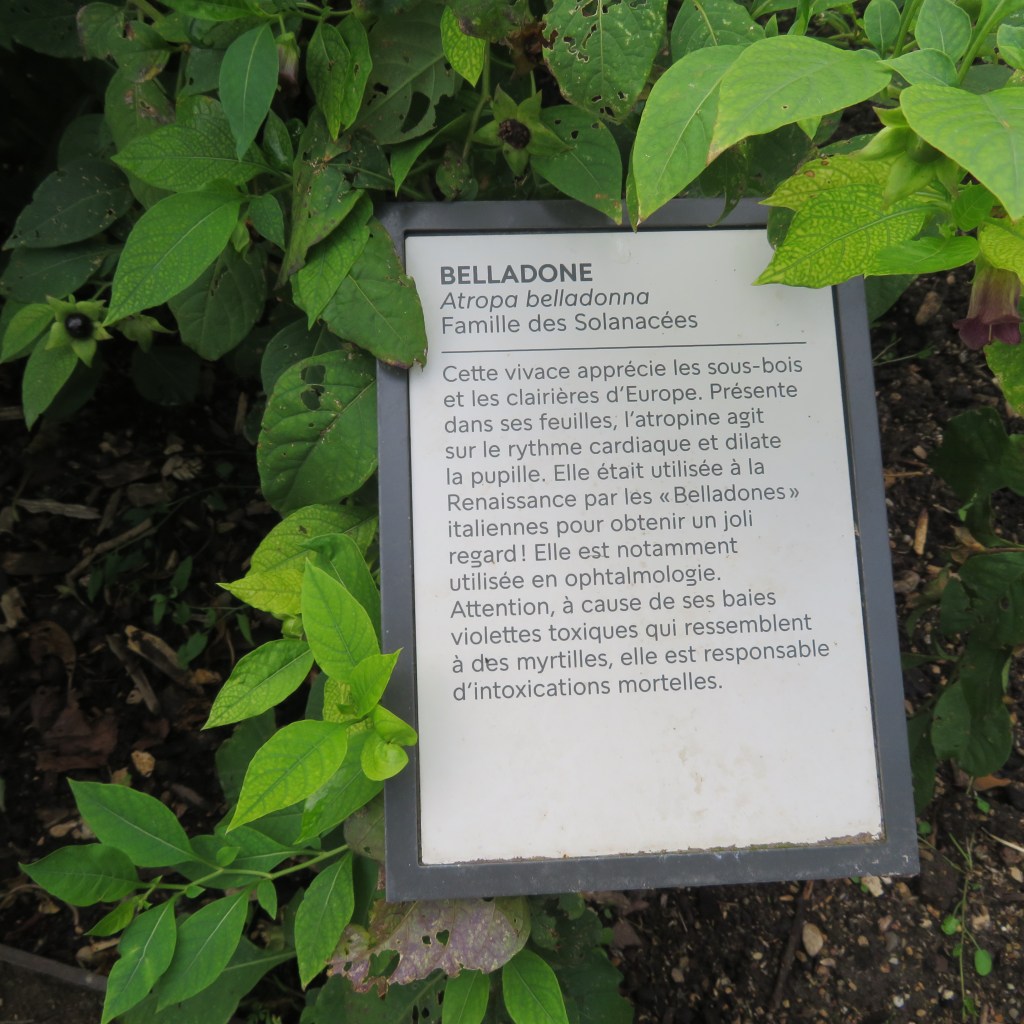
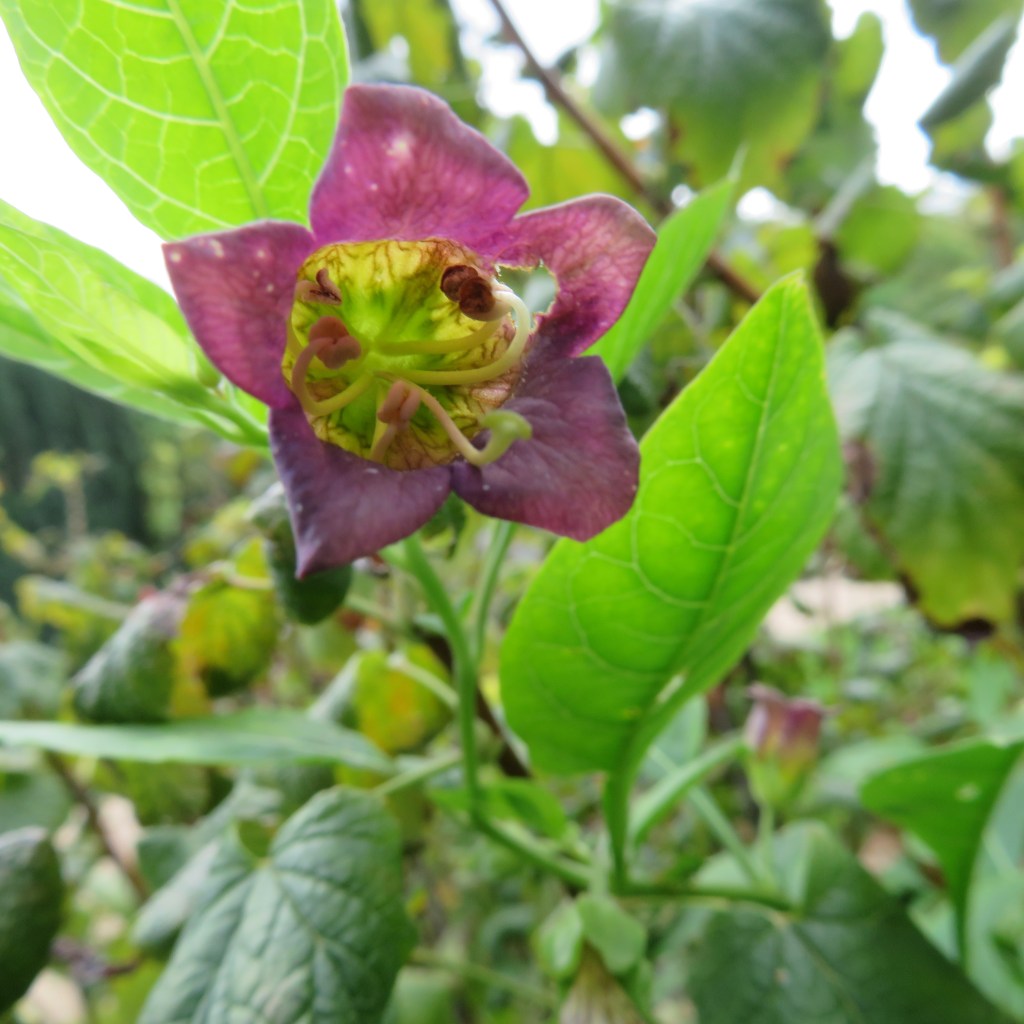
I recently came across a lovely specimen of Atropa belladonna in the Paris Jardin des Plantes, the garden established by Louis XIII in 1635. Its purpose was clearly defined by its name then, The Jardin Royal des Plantes Médicinales.
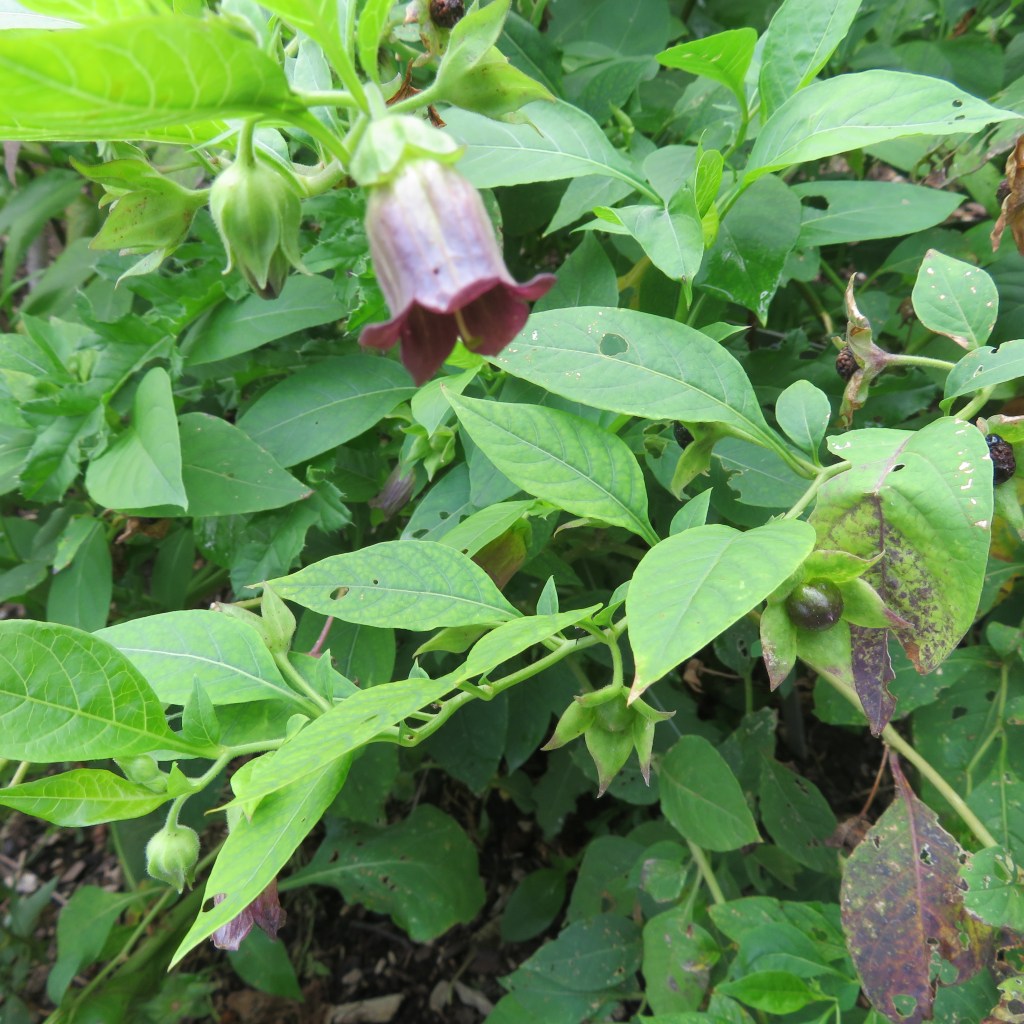
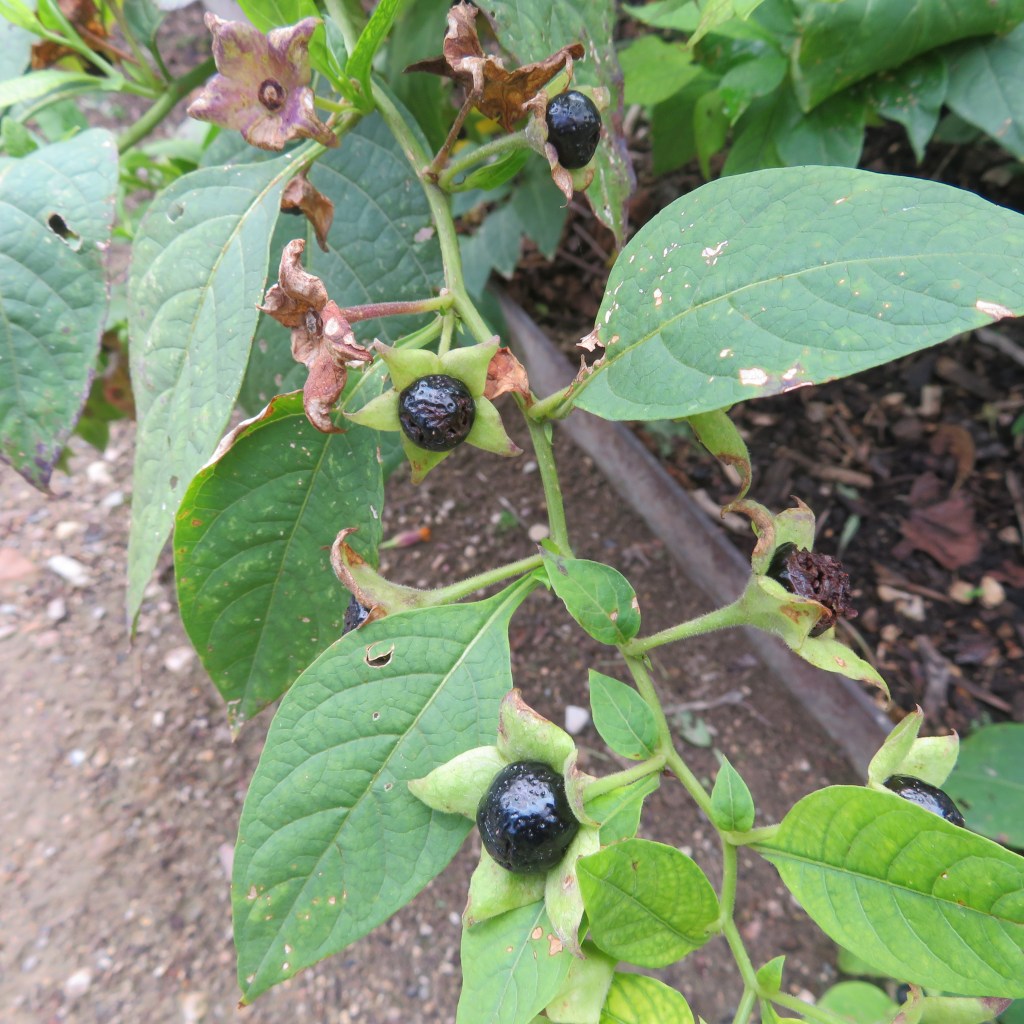
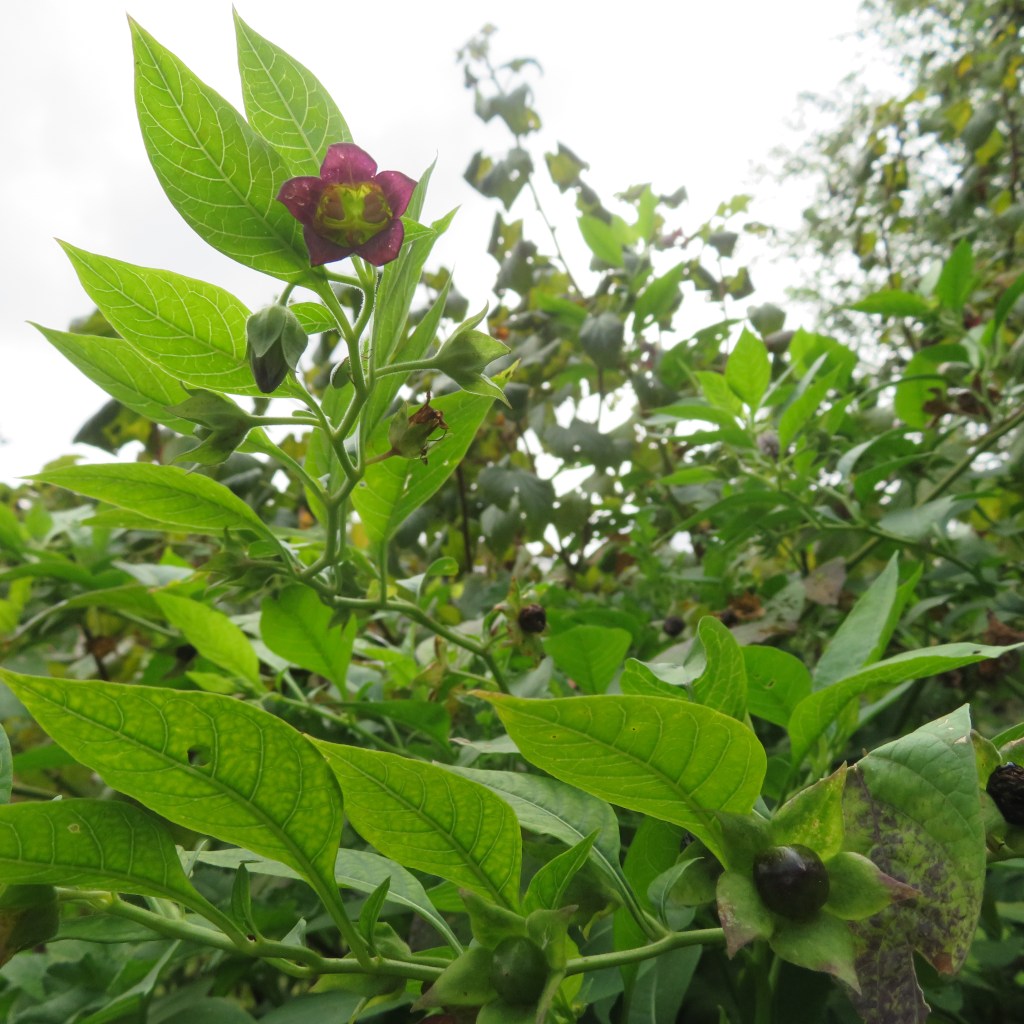
The Belladonna specimen I saw was carrying ripe berries while still in bloom when I visited in September 2024.
Atropa belladonna has led to the discovery of a host of medicines, some from its own constituents (atropine, hyocyamine and hyoscine also known as scopolamine) and others derived from them. Eli Lilly, the leading US multinational firm, cultivated the plant on an industrial scale for its alkaloids in the early 20th Century. Many of atropine’s derivative medicines are still widely prescribed for conditions as diverse as asthma, travel sickness, Parkinson’s disease, schizophrenia, opiate adiction and severe pain.
Drug discovery is often serendipitous and several of the new medicines came to light while researchers were investigating molecular derivatives which showed unexpected pharmacological effects useful in therapy.
It is fitting that the first mention of the medicinal plant seems to have been in Le Grand Herbier published in Paris, probably in 1498. The King may well have had a copy.
Atropa belladonna is a perennial plant of the nightshade or Solanaceae family which includes many vegetables such as the tomato, the potato, chillies, aubergines and ladies’ fingers. Unlike these vegetables though, it is potentially highly toxic; hence its other name, Deadly nightshade.
When Linnaeus coined the name for this striking plant, he reflected on its poisonous and cosmetic attributes. He named the genus Atropa, after the sister of destiny, Atropos,of Greek mythology, a Fate that could sever the thread of life. For the name of the species Linnaeus chose belladonna as it was known that noble Venetian ladies ‘belles dames’ used the plant cosmetically for dilating their pupils to make their eyes ‘bright and beautiful’, the Botox and fillers equivalent in ancient times. Legend has it that even Cleopatra knew of this to entice both Caesar and Mark Anthony.
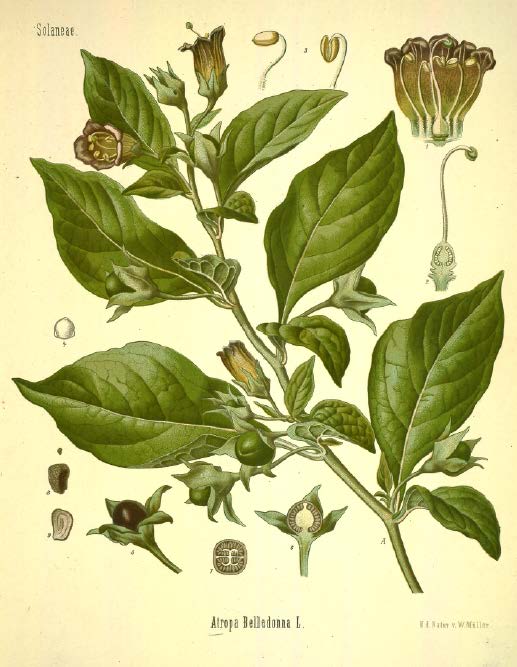
Photo Credits – Alain Li Wan Po CEBP except for Photos 6 (Eli Lilly, 1919) and 7 (Kohler,1887)
#TakingALeadFromNature #MedicineTrees #MedicinalHerbs #MedicinalPlants #Herbals #HerbalMedicine #PlantMedicine #HerbalTeas #FolkloreRemedies #NaturalMedicines #DeadlyNightshade #Belladonna #Belladone #Atropa #AtropaBelladonna #Atropine #Solanaceae #Parkinson’sDisease #JardinDesPlantes #Pharmacographia #DrugDiscovery #Atropos #KewGardens #Herbier #Venice #VenetianLadies #Cleopatra #MarkAnthony#Caesar #Botox #Cosmetics #DeadlyNightshade #CosmeticFillers #KingLouisXIII #HouseOfBourbon #JardinRoyalDesPlantesMédicinales #HerbalRemedies #FatesOfGreekMythology #Aesthetics #Herboristerie #Cleopatra #MarkAnthony #Caesar #CosmeticHerbals #Cosmeceuticals #CarlLinnaeus #Linnaeus #EliLilly

 Medicine Trees
Leave a comment