The chrysanthemum blooms when leaves fall off trees and insects retreat into hiding. Confucius (551-479 BCE)
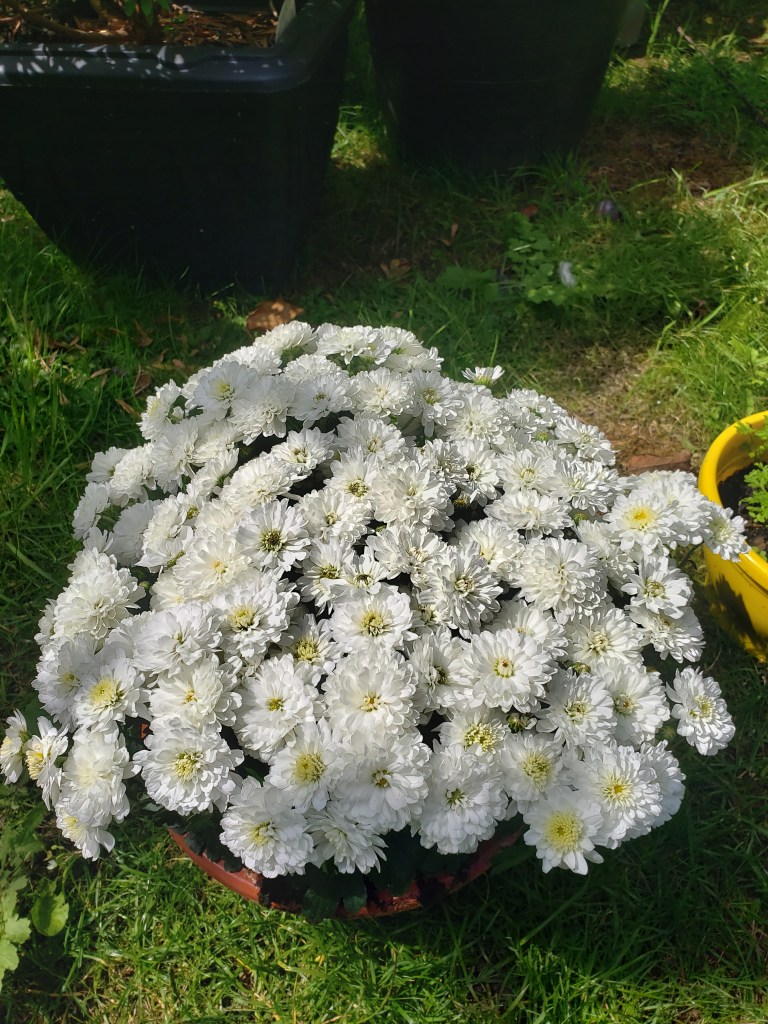
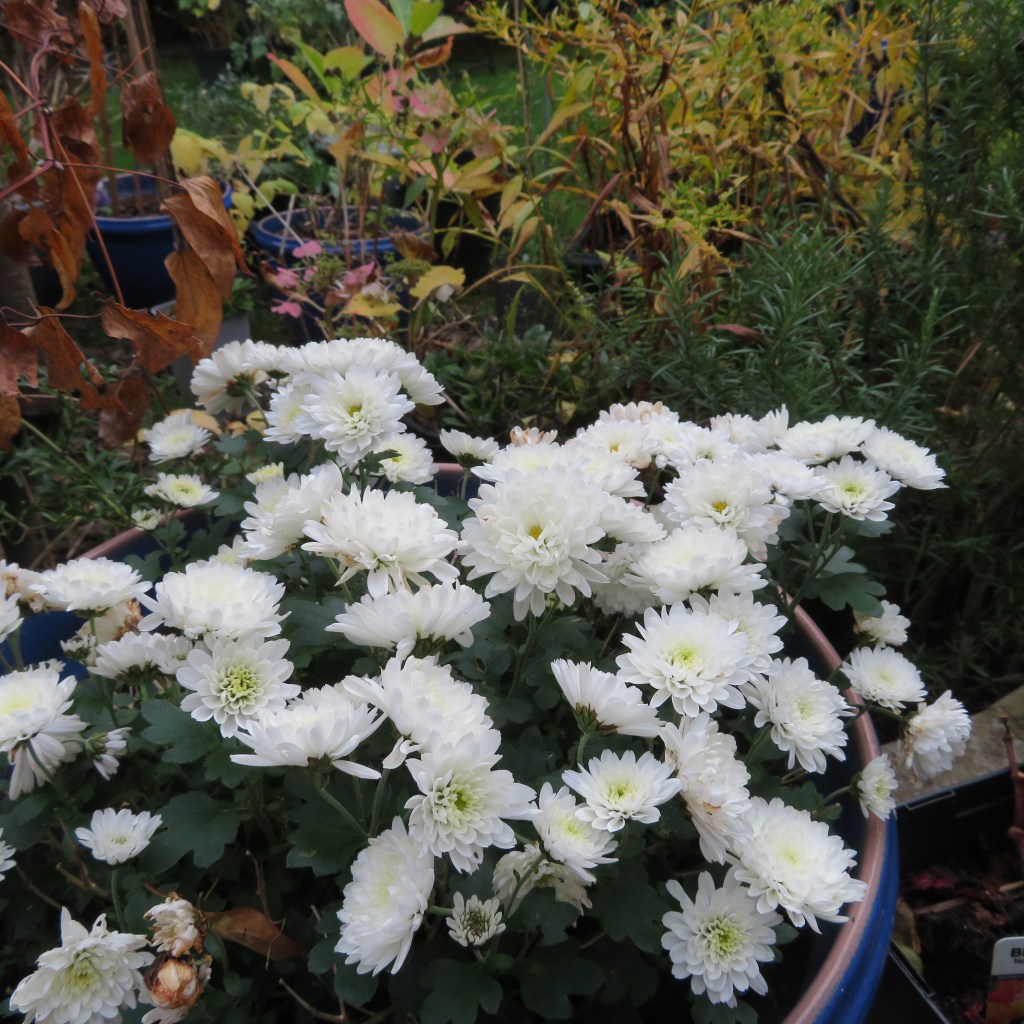
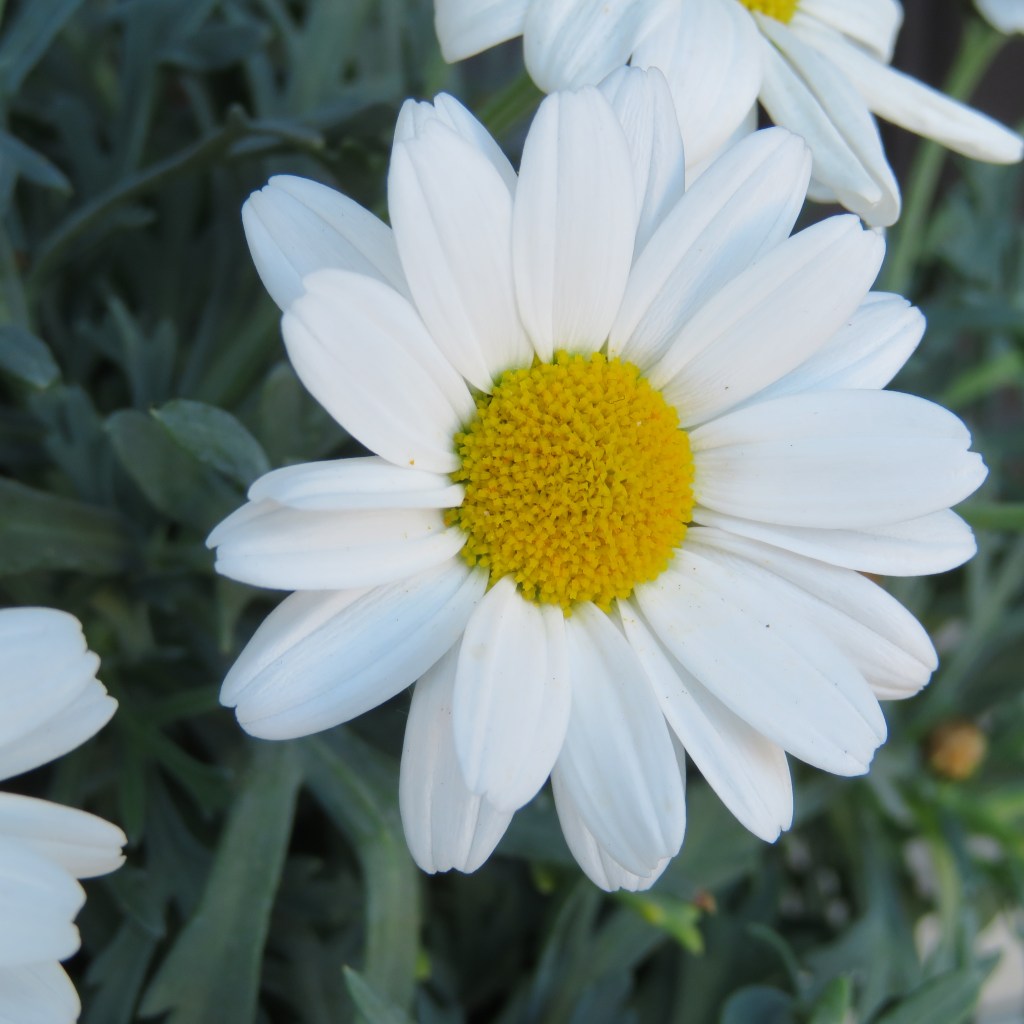
In late November 2023, my white chrysanthemum bloomed again, not as showy as during its first flush in late July (Photos 1 and 1) but a delight nonetheless at a time when many of the summer flowers had in the English Midlands made way for leaves to take their turn onstage strutting their autumnal colours.
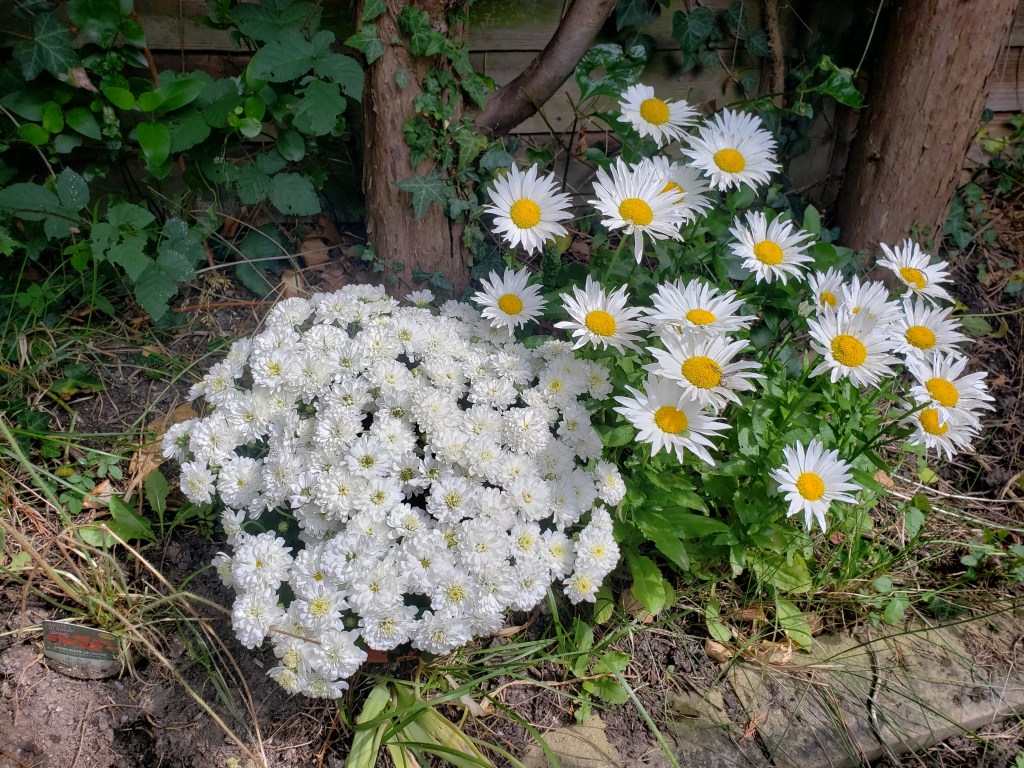
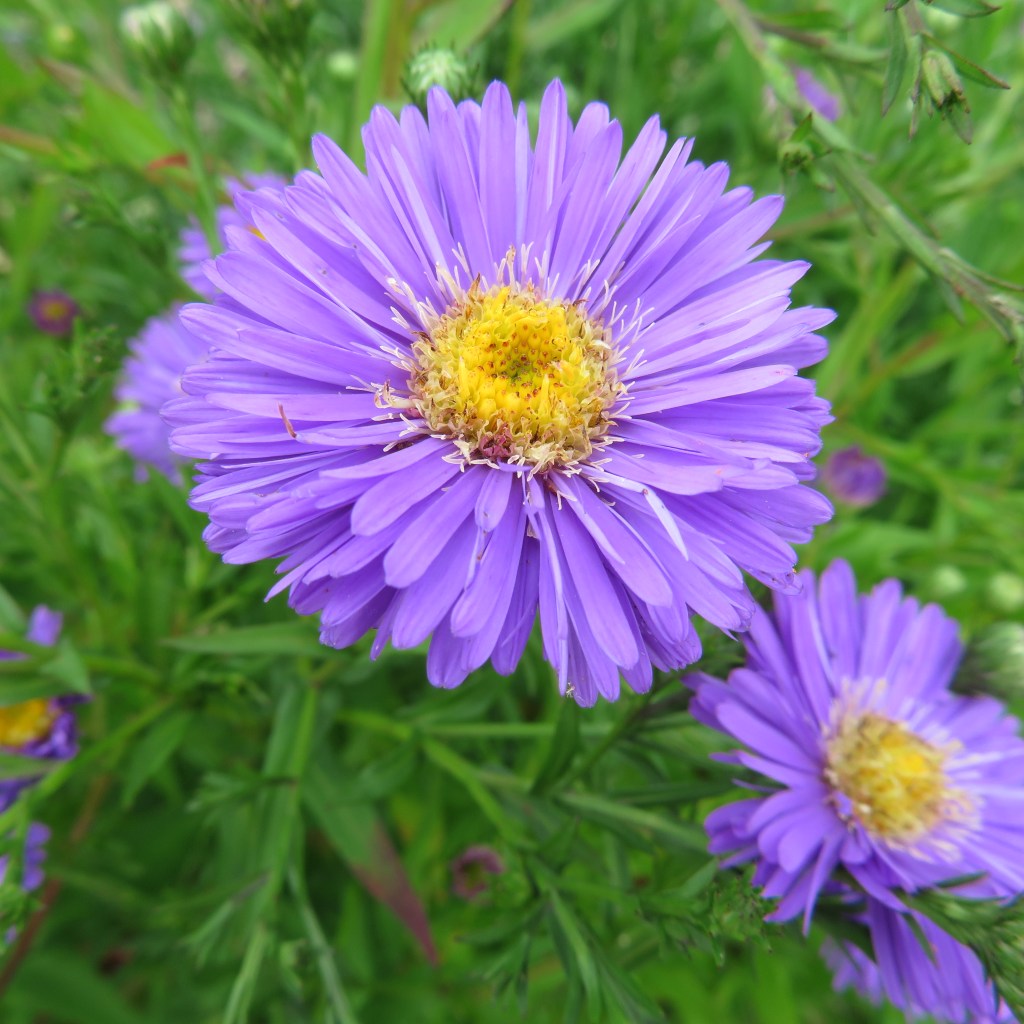
The Chrysanthemums form a genus of the Asteraceae family. Two others – Aster and Leucanthemum – also have delightful flowers that grace gardens throughout the world (Photos 3 a leucanthemum next to my chrysanthemum] and 4 (one of my Asters). In the colder climes, flowers from all three thrive in the low temperatures of autumn so well that even in late October Toronto they brighten street borders wonderfully (Photo 5). They do very well in the milder temperatures of November Seville too (Photo 6).
Chrysanthemum as herbal tea
The chrysanthemum has a long history of use as a medicine in the East. The ancient Chinese who called their early species simply the Yellow flower used it as a tonic to ‘lift the spirits and eliminate heat and toxins’, and so ‘slow down ageing and prolong life’. Today, a brew of the flower (C. morifolium) is widely drunk throughout China as an alternative to our favourite morning tonic, a cup of Camelia sinensis, also a Chinese invention which the British took to heart so passionately that the breakfast tea is often regarded as their invention. Yet, it was not until European seafarers found their way around the Cape of Good Hope that tea made its way to the West, and British tea clippers, including the poetically named Cutty Sark now moored at Greenwich, sailed the high seas to satisfy their seemingly insatiable thirst for the new brew.
Mixed with other herbs, the chrysanthemum is also promoted for more mundane ailments such as the common cold and nonspecific aches and pain. By the time of the Tang dynasty (618-90 CE), often referred to as the cosmopolitan Golden Age of the Chinese Empire, the chrysanthemum had become a popular garden ornament. When the plant reached the Land of the Rising Sun from China in the early eighth century, the inhabitants fell instantly in love with it, calling it the Golden flower, a name they deemed more appropriate for their national throne, and so to this day the Japanese Emperor sits on the Chrysanthemum throne (a Latin translation from the Greek chryos (gold) and anthemon (flower)).
Chrysanthemum as garden ornament and cut-flower
The earliest depictions of the chrysanthemums show them as small, yellow, daisy-like flowers. When varieties with large flowers first reached Europe from China in the late 18th Century, botanist Thomas d’Audibert de Ramatuelle was enamoured. The plant was so different from the Chrysanthemum indica named by Linneaus, based on a herbarium sample given to Chevalier de Lamarck by the adventurer and colonial botanist Pierre Sonnerat, that he called it a chamomile with large flowers.
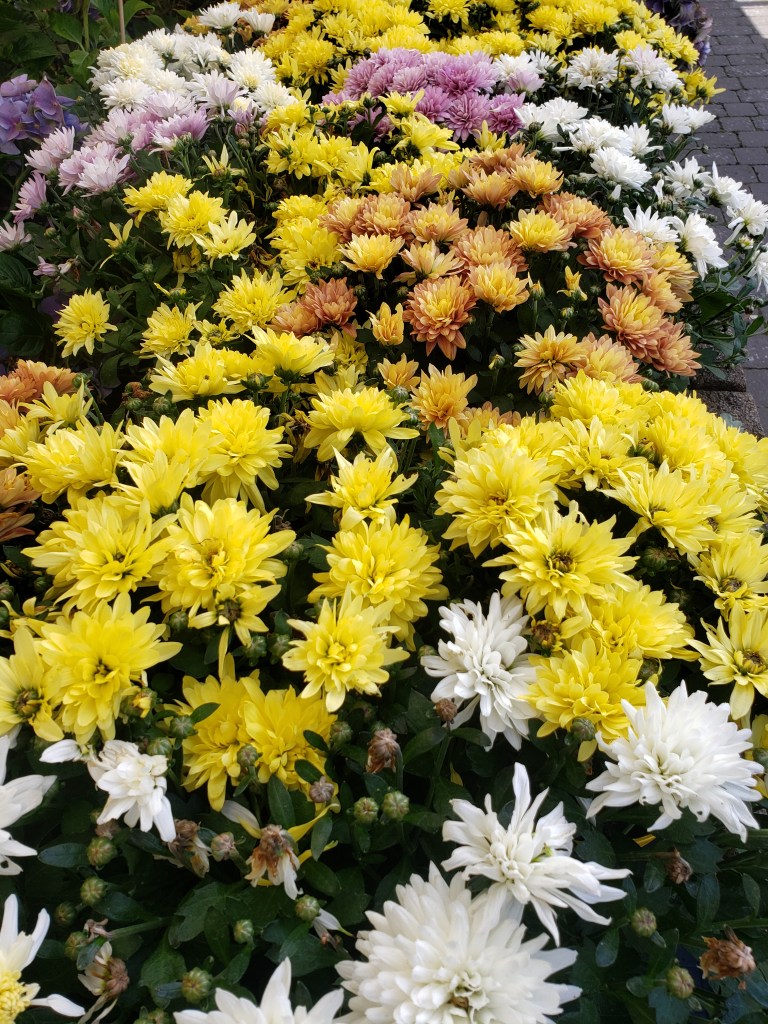
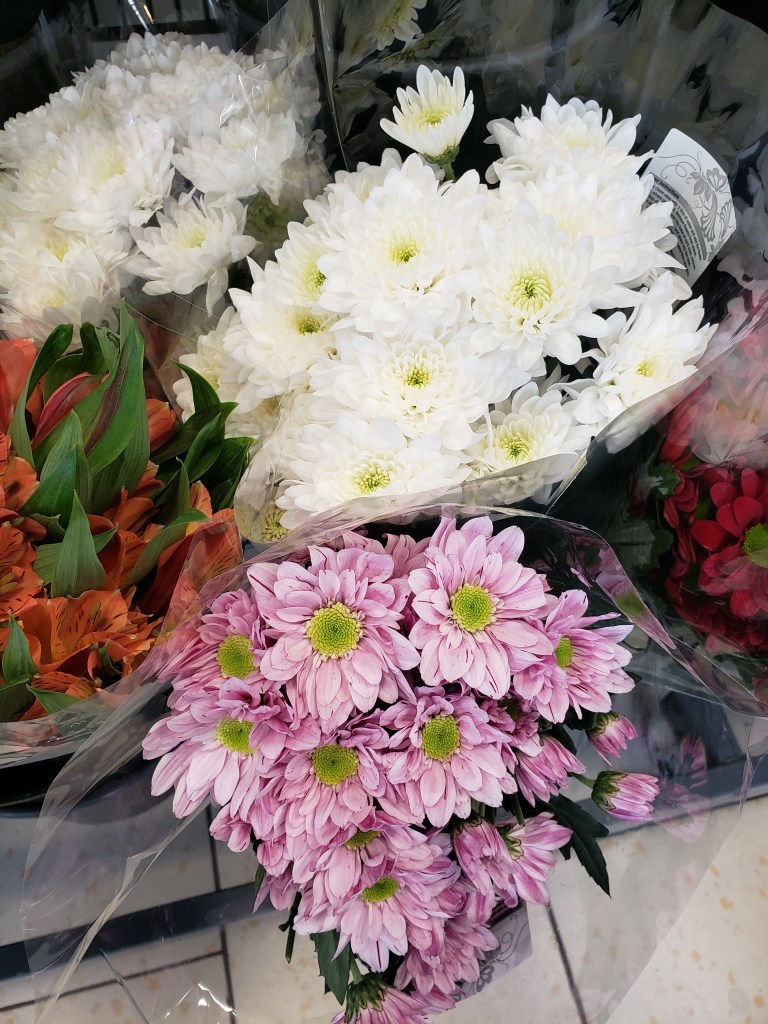
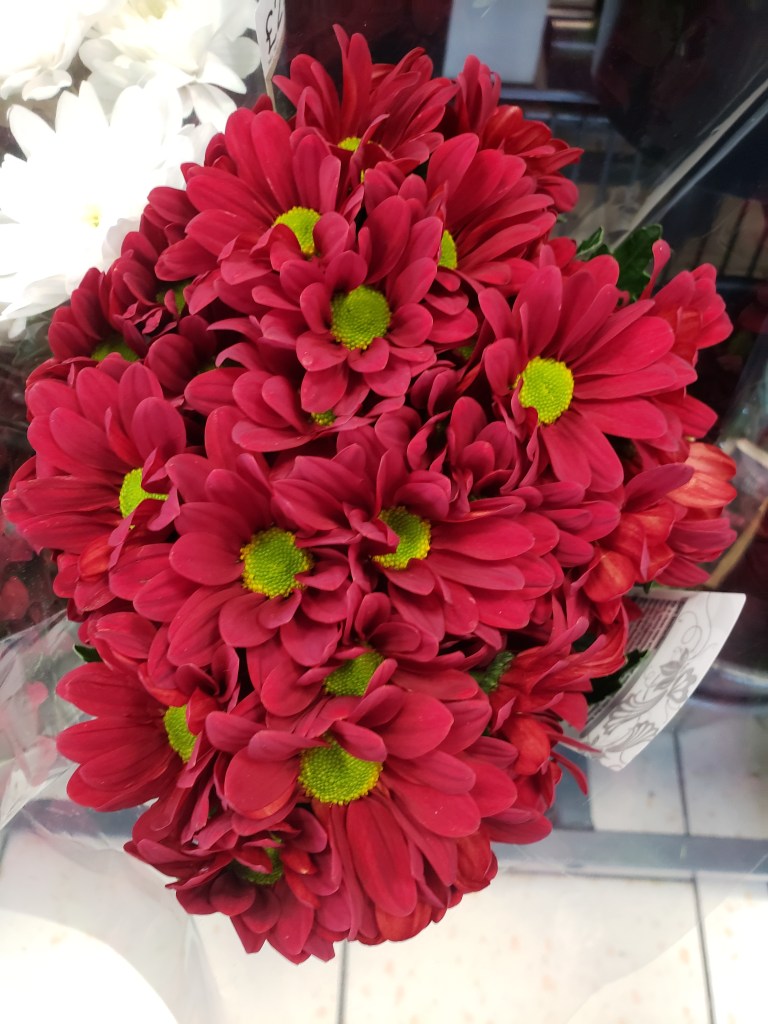
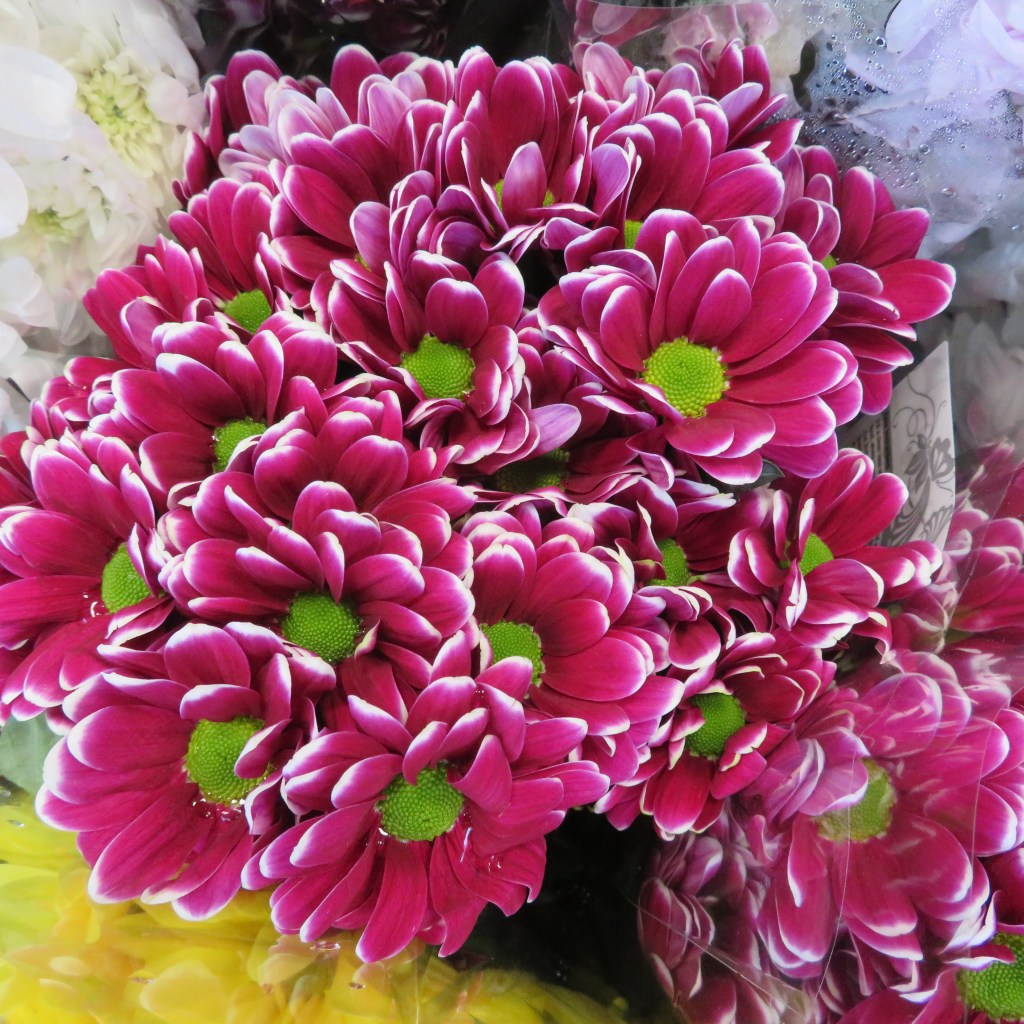
Chrysanthemums hybridise easily, and horticulturalists have since bred countless varieties to produce the dazzling arrays of colours and forms that we see today adorning our gardens, towns, and cities from early summer until late autumn (Photos). In late autumn and winter, the chrysanthemum forms much of the bouquets we buy from florists to brighten our indoors. As a cut flower, the chrysanthemum, with worldwide annual sales of well over a billion stems, is only second in popularity to the rose. In Japan, it outsells the rose threefold. To the French, celebration of La Toussaint (All Saints and of the Faithful Dead) in early November would not be complete without a bouquet of chrysanthemums. Elsewhere, it is the Aster, the Michaelmas daisy, that takes pride of place for celebrating St Michael, the Archangel, in late September or early November, depending on whether we are in Western or Eastern Europe.
Chrysanthemum as insecticide
Undoubtedly the greatest contribution of the chrysanthemum to health is as an ‘organic’ insecticide. Originally sold in the form of pyrethrum powder, their actives and derivatives, known as the pyrethrins or pyrethroids, are the most widely used insecticides worldwide. The chrysanthemums were previously classified under the genus Pyrethrum and the name has stuck for the insecticide and its actives. The insecticidal components, obtained from the yellow centre (disc florets), are regarded as among the safest insecticides to use around food and on edible plants and fruits. Next time you use an insecticide spray against unwanted household or plant insects, have a look at the label. Chances are it will contain a pyrethrin, often a derivative compound produced to improve performance. Mosquito repellent coils made with pyrethrum powder and lit like incense is still sold in some countries.
The ancient Persians used powders of the chrysanthemum flower (Chrysanthemum roseum Adam and C.coronarium Linn.; hence the name Persian powder) to protect their herds against debilitating and deadly insects. Today, the chrysanthemum, Chrysanthemum [Tanacetum] cinerariifolium, with much higher insecticide yield, is cultivated on an industrial scale to produce the valuable insecticidal powder. The market value of pyrethroid insecticides was estimated to be close to US$ 3.6 billion in 2022.
Note: One of our recent posts by Steven Chan is on the medicinal herb Ayapana triplinervis (triplinerve) used in the Indian Ocean Mascarene Islands for its claimed sedative, (and paradoxically) stimulant, and anti-inflammatory properties It has also been investigated for its antiviral and antimicrobial properties. The Ayapana (Eupatorium) genus is also of the Asteriaceae family
#OrganicInsecticides #HerbalTea #ChrysanthemumTea #ChrysanthemumCinerariifolium #TanacetumCinerariifolium #CameliaSinensis #LongevityHerbs #AntiageingHerbs #ImmortalityMedicines #ChrysanthemumThrone #Lamarck #MedicineTrees #MedicinalHerbs #MedicinalPlants #HerbalMedicine #PlantMedicines #FolkloreRemedies #TakingLeadFromNature #PlantPoisons #PlantInsecticides #Asteraceae #Aster #Daisies #Chrysanthemum #MichaelmasDaisy #PersianPowder
Photo Credits – Alain Li Wan Po CEBP


 Medicine Trees
Leave a comment